
Contents
Figure 1: The best course is the one you finish — everything below is ranked with that in mind
Free and paid beginner courses compared, with costs, caveats, and a 12-week plan
You typed "machine learning course" into a search bar and got four million results. Half promise a six-figure job in eight weeks. The other half want you to derive backpropagation by hand on day one. Neither helps. A good beginner course teaches you to train a model, judge whether it's any good, and know why it failed, without making you quit first. Below are the courses worth your time, who each one suits, and what each one costs. Prices were checked against official pages where possible, and everything that couldn't be verified is flagged.
What a Good Beginner Course Needs
Before the list, here's the checklist:
- Honest prerequisites. "No experience needed" often means "no experience needed to watch the videos."
- Hands-on practice. If you never write code, you're watching, not learning.
- Fundamentals first. Regression, classification, overfitting and evaluation come before neural networks — the same ground the machine learning algorithms guide in this series covers.
- Fresh tooling. Old code that won't run eats evenings.
- A fair price. Many of the best options are free.
The course you finish beats the course that's "best." Pick one you'll actually stick with.
The Top Pick for Most People: Machine Learning Specialization
Provider: DeepLearning.AI and Stanford Online (Andrew Ng), also available on Coursera.
This is the standard recommendation for good reason. It has three courses covering supervised learning, neural networks and tree ensembles, then unsupervised learning, recommenders and reinforcement learning.
- Level: Beginner. You need basic coding (loops, functions, if/else) and high-school math.
- Size: The official page lists nearly 95 hours of content, with 42 graded assignments. At five hours a week, the pace is roughly ten weeks.
- Tools: Python, NumPy, scikit-learn and TensorFlow. The course used to run on Octave, but it was rebuilt in Python.
- Cost: The official page lists DeepLearning.AI Pro at $25 a month billed annually or $30 billed monthly. Coursera offers its own enrollment with per-course certificates.
Pricing warning: several roundup articles still quote $49 a month. That's the Coursera figure or an older one. Check both sites before paying.
It's theory-friendly and gentle. If you want to understand why models work, start here.
The Free Fast Track: Google's Machine Learning Crash Course
Provider: Google for Developers.
Roundups describe it as free, self-paced and about 15 hours long, aimed at people with basic Python and algebra. It covers core ideas quickly, and it's great for busy people.
The caveats: one roundup notes some labs use older TensorFlow patterns, and it offers no real career path. Treat it as a free foundation, not a full education.
Learn by Doing: Kaggle Learn
Provider: Kaggle.
Kaggle's Intro to Machine Learning takes about three hours and Intermediate Machine Learning about four, according to a July 2026 roundup. Both use scikit-learn and reportedly give a free certificate. This is the best first afternoon in machine learning: you train a model in your browser, no setup needed.
It's short on theory by design. Pair it with a deeper course.
Code First, Theory Later: fast.ai
Provider: fast.ai (Practical Deep Learning for Coders).
fast.ai flips the usual order. You build working models first, then learn the theory underneath. It's free and takes roughly seven weeks.
But read this part: it expects about a year of coding experience, and one roundup says it was last refreshed in 2022, so library versions and deployment steps may have changed. It's a strong second course, not a gentle first one.
Pick Your Path: Karpathy, CS50 and StatQuest
A few more strong, free options:
- StatQuest with Josh Starmer (YouTube): visual, friendly explanations of ML concepts, about 20 hours for the core playlist. No assignments or certificate, so use it to build intuition alongside a course.
- Harvard CS50's Introduction to AI with Python: seven weeks of projects covering search, uncertainty, optimization, learning, neural networks and language. Harvard's page says you can take it free, and requires CS50x or about a year of Python. It's broader AI, not pure machine learning.
- Neural Networks: Zero to Hero (Andrej Karpathy): roughly 25 hours per the roundup, with confident Python and some calculus required. Skip it until you have the basics.
Paid Options Worth Knowing
If you prefer structure and community over free videos:
- Dataquest Machine Learning in Python: about 25 hours, with full access at $49 a month or $399 a year per Dataquest's own article. (Disclosure: Dataquest wrote that article and sells these courses.)
- Machine Learning A-Z (Udemy): about 44 hours, usually priced $15 to $60 on sale. Broad coverage, though one source flags older TensorFlow and Keras patterns.
- Zero to Mastery bootcamp: $39 a month or $279 a year, per the same article.
For career switchers comparing certificate programs specifically, the Python ML certification roundup goes deeper on the credentialed route.
Quick Comparison
| Course | Cost | Roughly how long | Best for |
|---|---|---|---|
| ML Specialization (Ng) | Free to audit on Coursera, or paid Pro | ~95 hours of content | Beginners wanting theory and structure |
| Google ML Crash Course | Free | ~15 hours | A quick, free foundation |
| Kaggle Intro + Intermediate | Free | ~7 hours total | A hands-on first taste |
| fast.ai | Free | ~7 weeks | Coders who learn by building |
| CS50 AI | Free | 7 weeks | Python learners wanting breadth |
| Dataquest ML in Python | Subscription | ~25 hours | Data analysts changing careers |
Durations for Google, Kaggle, fast.ai and Dataquest come from third-party roundups, not the providers' own pages.
A Simple Plan
If you're staring at the list and freezing, follow this:
- Week 1: Do Kaggle's Intro to Machine Learning. Get a model running.
- Weeks 2 to 12: Work through Andrew Ng's Machine Learning Specialization, or Google's Crash Course if time is tight.
- Alongside: Watch StatQuest whenever a concept won't click.
- After: Build one small project from data you care about. Predict something real.
- Then: Move to fast.ai or Deep Learning content once you're comfortable — the AI agent courses guide is a natural next stop if agents interest you.
Projects teach more than certificates. Hiring managers and curious friends both ask "what did you build?"
Common Pitfalls
- Course-hopping: starting a new course every week and finishing none of them.
- Paying before trying the free tier: Kaggle, Google, and Coursera audits cost nothing and cover weeks of learning.
- Watching without coding: video time feels like progress but isn't practice.
- Starting too advanced: fast.ai and Karpathy's course punish beginners — they're second courses.
- Trusting roundup prices: the $49/month figure for Ng's course circulates years after it changed.
- Collecting certificates instead of building projects: the wall of completions never gets asked about in interviews.
- Skipping evaluation fundamentals: you can't tell a good model from a lucky one yet — that comes first, tools second.
Recommended Books
| Cover | Book | Description | Get it |
|---|---|---|---|
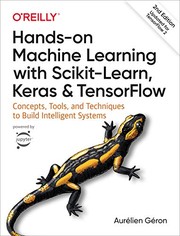 |
Hands-On Machine Learning with Scikit-Learn, Keras, and TensorFlow | - the book companionship for any of the courses above. | View on Amazon |
 |
An Introduction to Statistical Learning | - the free-and-clear theory backbone, freely available as a PDF. | View on Amazon |
 |
The Hundred-Page Machine Learning Book | - the compact reference to keep beside the keyboard. | View on Amazon |
Partner offer
Educative Unlimited: every AI course, one subscription
Interactive, browser-based courses with no local setup — a natural fit for the learning path above. One subscription unlocks the full generative AI, ML, and data catalog, so you can work through it at your own pace.
Affiliate link — we may earn a commission at no extra cost to you.
Unlock AI That Actually Works
Get lifetime access to GPT-6 Astra, Claude Fable 5.1, Gemini 3.5, Grok 4.5, and more — all in one platform. Build websites, apps, videos, content, and digital products from a single command. No monthly fees. No tool-hopping.
Click here to get GPTAstra Max now — one-time payment, lifetime access.
Frequently Asked Questions
What's the best machine learning course for a complete beginner?
For most people, Andrew Ng's Machine Learning Specialization on Coursera — it's theory-friendly, gentle, and rebuilt in Python. But the best first afternoon is Kaggle's Intro to Machine Learning: about three hours, in your browser, no setup, and you finish with an actual trained model. The recommended path is Kaggle first for momentum, then the Specialization for depth, with StatQuest videos alongside whenever a concept won't click.
How much do beginner machine learning courses actually cost?
Less than most people expect. Kaggle Learn, Google's ML Crash Course, fast.ai, CS50 AI, and StatQuest are all free. Andrew Ng's Specialization can be audited free on Coursera, or paid via DeepLearning.AI Pro at $25/month billed annually or $30 billed monthly per the official page — note that many roundup articles still quote an outdated $49/month, so check both sites before paying. Paid options like Dataquest ($49/month or $399/year) or Udemy courses ($15–60 on sale) add structure, not content you can't get free.
Do I need to know math and Python before starting?
For the gentlest options, barely: Kaggle's intro assumes basic Python, and Google's Crash Course needs basic Python plus algebra (high-school level is fine). The ML Specialization needs basic coding — loops, functions, if/else — and high-school math. Nobody expects you to derive backpropagation on day one; the right beginner course builds intuition first and adds math as it becomes useful. If a course demands calculus in week one, it's not a beginner course.
Are machine learning certificates worth it for getting a job?
Certificates prove you finished something; projects prove you can build something. For career switchers, one certificate from a recognized program plus a small portfolio of real projects beats a wall of course completions. Hiring managers consistently ask "what did you build?" — so treat courses as the way you learn the skills, and the project as the thing you actually show. Certificates matter most when the issuer is recognized (Coursera/Stanford, Harvard, Kaggle) and least when they're just a paid checkout.
Wrapping This Up
The best beginner machine learning course is a short list, not a mystery. Start with a hands-on taste (Kaggle), build theory with Ng's specialization or Google's crash course, and add a project. Most of this costs nothing — the textbook guide and the computer vision courses roundup cover where to go deeper once the basics land.
Pick one course today, block three hours this week, and start. Course number one beats a perfect plan every time.


