Contents
Figure 1: The right book at the right level — the wrong one is just an expensive monitor stand
Beginner, practitioner, and theory picks, with free PDFs marked and costs verified
You bought an ML book. It sat on your desk for three weeks, then became a very expensive monitor stand. Sound familiar? The problem usually isn't you. It's the match between the book and your level. A beginner who opens a graduate probability text quits by page 40. A practitioner who reads "what is a variable?" quits by page 4.
Below are the books worth owning, sorted by who should read them. Editions and access were checked against official pages where possible, and everything that couldn't be confirmed is flagged.
How to Pick a Book
Ask three questions before buying:
- Do I want to code or understand? Some books are code-first. Others are math-first. Few do both well.
- Which tools? A book built on TensorFlow won't match a PyTorch workflow.
- How old is it? Libraries change faster than publishers print. Check the edition and the code repository.
A free book you finish beats a famous book you don't. Several of the best options below cost nothing.
Best for Complete Beginners
The Hundred-Page Machine Learning Book (Andriy Burkov)
It's short on purpose. A January 2026 roundup lists it as a beginner pick, first edition. Read it to get the map of the territory in a weekend. It won't teach you to build much, so pair it with a hands-on book.
Hands-On Machine Learning with Scikit-Learn, Keras, and TensorFlow (Aurélien Géron, O'Reilly)
This is the standard "learn by building" book. It runs 861 pages in its third edition, and the author's GitHub repository confirms the code for it, recommending Python 3.10. Work through the notebooks, don't just read. One caution: the repository checked didn't mention a newer edition, but verify with O'Reilly before buying in case one exists. The deep learning half uses Keras and TensorFlow, so if you prefer PyTorch, look at the next book.
Machine Learning with PyTorch and Scikit-Learn (Raschka, Liu, Mirjalili)
A strong alternative to Géron if you want PyTorch. It's listed as a beginner pick in the same roundup. Choosing between these two is mostly choosing between frameworks.
An Introduction to Statistical Learning (ISLP) (James, Witten, Hastie, Tibshirani, Taylor)
The official site confirms a Python edition from 2023 and a second R edition from 2021, with free PDFs for each, plus Springer print versions.
This is the favorite first book for understanding why methods work, without heavy math. It's gentle, clear and free. Start here if you like statistics or want a solid foundation — the same ground the machine learning algorithms guide in this series covers in short form.
Best for Practitioners
You can already train models. Now you want depth, judgment or shipping skills.
Designing Machine Learning Systems (Chip Huyen, O'Reilly, 2022)
This one isn't a tutorial and contains no code. It covers how to design ML systems that are reliable, scalable and maintainable, aimed at ML engineers, data scientists and platform engineers. If your models work in notebooks and die in production, read this.
Build a Large Language Model (From Scratch) (Sebastian Raschka, Manning, 2024)
You build a GPT-like model in PyTorch, step by step: text handling, attention, the model itself, pretraining and finetuning. The author's repository says the main chapters run on conventional laptops. It needs strong Python skills, and it comes with a 17-hour video course. There's also a standalone sequel on reasoning models, which starts from a pretrained model. Building one yourself is the fastest way to stop treating LLMs as magic.
Hands-On Large Language Models (Alammar, Grootendorst)
A roundup lists it as an honorable mention. Edition and contents beyond the title couldn't be verified, so check the publisher before buying.
Best for Theory and Depth
These reward patience.
- Pattern Recognition and Machine Learning (Christopher Bishop): a classic, listed as advanced in the roundup. Expect serious math.
- The Elements of Statistical Learning (Hastie, Tibshirani, Friedman): the older, harder sibling of ISLP, also free as a PDF. Read ISLP first.
- Probabilistic Machine Learning (Kevin Murphy): the author's repository lists An Introduction (2022) and Advanced Topics (2023). Publisher and free-PDF status weren't confirmed from that page — check the book's own site.
- Understanding Deep Learning (Simon Prince): the repository hosts notebooks and slides, plus an answer booklet and errata, under a Creative Commons non-commercial license. Free full PDF and publication year weren't confirmable from that page — verify both.
- Mathematics for Machine Learning (Deisenroth, Faisal, Ong): the roundup's honorable mention, and the usual pick if math is your gap.
- Deep Learning (Goodfellow, Bengio, Courville): also an honorable mention, and well known. It predates transformers, so don't expect it to cover the LLM era.
Quick Comparison
| Book | Best for | Style | Cost note |
|---|---|---|---|
| ISLP | Beginners wanting understanding | Light math, Python | Free PDF |
| Hands-On ML (Géron) | Beginners who build | Code-first, TensorFlow | Paid |
| ML with PyTorch and Scikit-Learn | Beginners using PyTorch | Code-first | Paid |
| Designing ML Systems | Practitioners shipping models | No code, design-focused | Paid |
| Build an LLM from Scratch | Practitioners | PyTorch, from scratch | Paid, with free repo |
| Bishop's PRML | Theory seekers | Math-heavy | Paid |
A Reading Plan That Works
Don't read these cover to cover in order. Try this:
- Start with ISLP or Géron. Pick one. ISLP if you want intuition, Géron if you want to build.
- Code along. Run every notebook. Change something and break it on purpose.
- Add one project. Predict something real from data you care about.
- Then specialize. Production? Read Huyen. LLMs? Read Raschka. Theory? Read Bishop or Murphy.
- Use math books as references, not as prerequisites. Look things up when you hit a wall.
Check the errata and repo before you commit. Active repositories signal a book that still runs.
If you'd rather learn from courses alongside the reading, the beginner ML courses guide pairs well with this plan, and the textbook roundup covers the academic end in more depth.
Common Pitfalls
- Buying above your level: a graduate theory text as your first ML book is a quit-by-page-40 machine.
- Buying without checking the repo and edition: libraries change faster than print runs.
- Reading without running code: a code-first book read like a novel teaches nothing durable.
- Reading cover to cover: specialist chapters and math references are meant to be skipped and returned to.
- Hoarding reading lists instead of reading: five bookmarked lists beat zero finished books nobody.
- Choosing by fame: the most famous deep learning book predates transformers and isn't a beginner text.
- Ignoring errata: active errata pages and repositories mean the book still runs; silence means check the publication date.
Recommended Books
If you only buy three, make it these:
| Cover | Book | Description | Get it |
|---|---|---|---|
 |
An Introduction to Statistical Learning | - the free-PDF foundation; buy the print edition to support the authors. | View on Amazon |
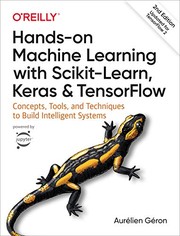 |
Hands-On Machine Learning with Scikit-Learn, Keras, and TensorFlow | - the build-it companion that stays on your desk. | View on Amazon |
 |
Build a Large Language Model (From Scratch) | - the fastest route to understanding the models everyone talks about. | View on Amazon |
Unlock AI That Actually Works
Get lifetime access to GPT-6 Astra, Claude Fable 5.1, Gemini 3.5, Grok 4.5, and more — all in one platform. Build websites, apps, videos, content, and digital products from a single command. No monthly fees. No tool-hopping.
Click here to get GPTAstra Max now — one-time payment, lifetime access.
Frequently Asked Questions
What's the best machine learning book for a complete beginner?
Two, depending on what you want. An Introduction to Statistical Learning (ISLP) if you want to understand why methods work — it's gentle, light on math, and has a free PDF. Hands-On Machine Learning with Scikit-Learn, Keras, and TensorFlow (Aurélien Géron) if you want to build — it's code-first and project-driven. Many people read ISLP for intuition and keep Géron as the desk reference. If you want PyTorch instead of TensorFlow, Raschka's Machine Learning with PyTorch and Scikit-Learn fills the same role as Géron.
Should I learn machine learning with TensorFlow or PyTorch?
For new learners in 2026, PyTorch is the safer default: it dominates current research, most new tutorials and courses use it, and the hiring market for ML engineering skews that way. TensorFlow (via Keras) remains fine and is what Géron's Hands-On ML teaches. The practical advice: choosing between Géron and Raschka is mostly choosing between frameworks — pick the one your target job or community uses, and don't let it delay actually starting.
Are these machine learning books free?
Several of the best ones are. An Introduction to Statistical Learning has free PDFs for both the Python (2023) and R (2021) editions from the authors' official site. The Elements of Statistical Learning is also freely available. Understanding Deep Learning shares notebooks, slides, and an answer booklet under a Creative Commons non-commercial license, though the full PDF status should be checked on the book's own page. Build a Large Language Model (From Scratch) ships with a free code repository. The rest are paid print or ebook purchases.
Which book should I read to understand LLMs?
Build a Large Language Model (From Scratch) by Sebastian Raschka — you build a GPT-like model in PyTorch step by step: text handling, attention, pretraining, and finetuning. The main chapters run on conventional laptops per the author's repository, and it comes with a 17-hour video course. For applied LLM work without the from-scratch build, Hands-On Large Language Models (Alammar and Grootendorst) is the applied companion. Read the from-scratch one if you want LLMs to stop being magic.
Wrapping This Up
The best machine learning book depends on where you stand. Beginners should start with ISLP or Géron. Practitioners should reach for Huyen or Raschka. Theory fans can climb to Bishop and Murphy, once the foundations feel solid — and the advanced Python ML books list covers the next tier when these run out.
Pick one book today, open its repository, and run the first notebook tonight. Momentum beats the perfect reading list every time.