 Buy me a coffee

Contents
Figure 1: Start free, pay only for structure — and verify the syllabus before you pay
What a cleaning course must cover, seven options checked, and which claims held up
Messy data is the job. Every analyst and ML engineer eventually learns that the model is the easy 10% and the CSV with three date formats is the other 90%. So which courses actually teach you to fix that CSV?
Free and paid options were checked, with a mark of which claims could be verified from the provider's own page and which couldn't. The short version: start free, then pay only if you need structure or a certificate.
What "Data Wrangling" Actually Covers
People use "wrangling" and "cleaning" loosely. Here's what a good course should teach you:
- Fixing data types: dates stored as text, numbers stored as strings.
- Handling missing values: dropping, filling, and knowing when each one hurts (the imputation guide covers the trade-offs).
- Removing duplicates, including near-duplicates.
- Cleaning text and categories: "NY", "N.Y." and "New York" are one place.
- Validating ranges and cross-field logic: a customer who is −3 years old, or ships before they order.
- Reshaping and merging: pivots, melts, joins, groupby.
If a course skips validation and reshaping, it's a pandas tutorial, not a cleaning course. Nothing wrong with that, but know what you're buying.
How I Judged These
Four things: does it cover the list above, does it make you write code, is the cost clear, and can the claims be verified from the provider's own page? That last one matters. Some course pages gave real details. Others gave one marketing sentence. Each option below marks which is which.
The Options, Checked One by One
1. DataCamp: Cleaning Data in Python
The most on-topic paid option that could be verified. DataCamp's page lists it as intermediate, about 4 hours, with 13 videos and 44 exercises. Topics include fixing data types, range constraints, duplicates, text and categorical inconsistencies, cross-field validity, missing data, and record linkage using string similarity.
Record linkage is the standout. Most beginner courses skip fuzzy matching entirely, and real data demands it.
The catch: the page says "Start Course for Free" but doesn't say what the full course costs or what subscription it needs. Pricing couldn't be confirmed — check before you commit. IMO it's a good fit if you like short exercises with instant feedback; a weaker fit if you want to build a messy-data project from scratch.
2. Kaggle Learn: Data Cleaning and Pandas
Kaggle offers short, hands-on micro-courses on both topics. The fetched pages returned only a title and a one-line description, so lesson counts, exact topics, and time estimates can't be quoted from the pages themselves.
What can be said: Kaggle Learn is built around notebooks you run in the browser, and it's generally free — background knowledge, not something the fetched pages confirmed. Treat it as a quick warm-up, not a full curriculum.
Pros and cons, honestly:
- Pro: zero cost to try, and you can start in minutes.
- Pro: you practice in a real notebook environment.
- Con: short lessons mean shallow coverage.
- Con: the syllabus couldn't be verified.
3. Wes McKinney's Python for Data Analysis (free online)
McKinney created pandas. His book's open-access edition is free to read online per his site. It's not a "course" with videos or grading, but its chapters on data cleaning, preparation, joining and reshaping are the closest thing to a canonical reference — the same title the best books guide puts first.
Who should read it: anyone who learns well from text and wants to understand why pandas works the way it does. Who should skip it: anyone who needs a deadline and a gold star. Books don't nag you.
4. Jake VanderPlas: Python Data Science Handbook
Another free-to-read online resource, with a notebook-style layout. It's broader than pure cleaning — NumPy, pandas, plotting, and machine learning too. For wrangling specifically, the pandas chapters on missing data, combining datasets, aggregation, and pivot tables are the useful part.
Fair warning: it's older than the other options here, and pandas has changed. Check any code against the current pandas docs before trusting it. That's true of any book, but it bites harder with fast-moving libraries.
5. The pandas docs: "10 minutes to pandas"
Free, official, and always current. The "10 minutes" guide is a quick tour of selecting, missing data, grouping, merging, and reshaping. It's not a course, but it's the best fact-check for everything else on this list.
Here's a habit that pays off: when a course shows you something, look it up in the official docs. You'll catch outdated code and learn to read documentation, which is a core skill anyway.
6. freeCodeCamp: Data Analysis with Python
freeCodeCamp's platform is free to use. The certification page, when fetched, returned only generic site metadata — the syllabus, time estimate, and cleaning coverage couldn't be confirmed. It's listed as "worth checking yourself," not recommended on evidence that isn't there.
7. Roundup Lists (a Word of Caution)
A published list of pandas courses from Analytics Insight was also reviewed. It reads as promotional: no prices, no levels, no methodology for why courses were chosen. Lists like that are fine for discovering names. They're not fine for deciding where to spend money. Use them for ideas only.
Quick Comparison
| Option | Format | Cost (what I verified) | Best for |
|---|---|---|---|
| DataCamp: Cleaning Data in Python | Short videos + exercises | Unclear on page | Structured, on-topic practice |
| Kaggle Learn | Browser notebooks | Not confirmed on page | Quick warm-up |
| McKinney's book | Text | Free online (per his site) | Deep understanding |
| VanderPlas's handbook | Text + notebooks | Free online | Broad foundation |
| pandas docs | Reference | Free | Checking everything else |
| freeCodeCamp | Interactive | Platform is free | Unverified syllabus |
For tool-level alternatives no course here covers — Polars, DuckDB, and the rest — the data cleaning tools comparison picks up where this list stops.
How to Pick
Ask yourself three questions:
- Do I need structure? If yes, pick a guided course like DataCamp's.
- Do I learn from reading? If yes, start with McKinney, and keep the pandas docs open.
- Am I just testing the waters? Try Kaggle Learn. It's low risk.
The Part No Course Gives You: Messy Data of Your Own
Here's the honest bit. Every course dataset has been pre-selected to break in teachable ways. Real data breaks in ways nobody planned.
So take a real, ugly dataset — a public one, or work data you're allowed to use — and clean it end to end. Write down every decision: why you dropped those rows, why you filled that column. That log becomes your portfolio piece, and it shows employers more than a certificate does.
The worst one I cleaned was a 2019 CRM export where a single created_at column held five formats — ISO, MM/DD/YYYY, epoch seconds, Excel serial days, and one locale's 31-Dec-2019 — plus two years of records with no timezone at all. Parsing it took longer than the model it fed, and one ambiguous batch (03/04/2019, read as both March and April) silently shifted 1,200 rows by a month until the weekly report caught it. No course dataset had prepared me for how much of that job is deciding what a date even means.
The profiling habit that would have surfaced it in ten minutes:
# profile before you touch anything
df.dtypes
df.isna().mean().sort_values(ascending=False)

# cross-field checks no course dataset will train you to want
bad = df["age"].lt(0) | df["ship_date"].lt(df["order_date"])
df.loc[bad]  # find them before they find production
The full version of that habit is the EDA checklist — a mechanical pass you run on every new dataset before modeling.
Common Pitfalls
- Cleaning before looking — profile the data first: types, missing counts, value ranges. The EDA checklist is the order of operations.
- Dropping rows by reflex — missing data is often informative; know when dropping costs you signal.
- Overwriting the raw file — keep the original untouched and script every change.
- Trusting the output — always re-check counts and ranges after each step.
- Taking roundup lists as buying decisions — promotional rankings with no prices or methodology are for discovering names, not spending money.
- Paying before checking what a page actually says — if price, syllabus, and duration aren't on the page, you're buying on a marketing sentence.
- Collecting courses — finishing one and applying it beats starting five.
Best Book to Read
| Cover | Book | Description | Get it |
|---|---|---|---|
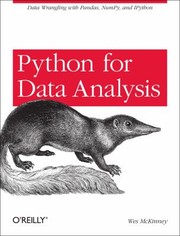 |
Python for Data Analysis | the free online chapters cover cleaning, preparation, joining, and reshaping from pandas' creator; buy the print edition if you learn better on paper. | View on Amazon |
 |
Python Data Science Handbook | the notebook-style companion for NumPy, pandas, and beyond; free to read online first. | View on Amazon |
 |
Python Data Cleaning Cookbook | the recipe-driven, on-topic print counterpart to a course, organized by the exact problems this list teaches. | View on Amazon |
 |
Python Feature Engineering Cookbook | where cleaning graduates into model-ready features: imputation, encoding, discretization, transformation. | View on Amazon |
Partner offer
Educative Unlimited: every AI course, one subscription
Interactive, browser-based courses with no local setup — a natural fit for the learning path above. One subscription unlocks the full generative AI, ML, and data catalog, so you can work through it at your own pace.
As an Amazon Associate I earn from qualifying purchases. Links on this page are affiliate links, and I may earn a commission at no extra cost to you.
Unlock AI That Actually Works
Get lifetime access to GPT-6 Astra, Claude Fable 5.1, Gemini 3.5, Grok 4.5, and more — all in one platform. Build websites, apps, videos, content, and digital products from a single command. No monthly fees. No tool-hopping.
Click here to get GPTAstra Max now — one-time payment, lifetime access.
Frequently Asked Questions
Which is the best paid course for data cleaning in Python?
DataCamp's Cleaning Data in Python is the most on-topic paid option with a verifiable syllabus: the provider page lists it as intermediate, about 4 hours, with 13 videos and 44 exercises, covering fixing data types, range constraints, duplicates, text and categorical inconsistencies, cross-field validity, missing data, and record linkage using string similarity. Record linkage is the standout — most beginner courses skip fuzzy matching. One catch: the page says "Start Course for Free" without stating the full course price or required subscription, so confirm pricing before committing.
What are the best free resources to learn data wrangling?
Four stand out. Wes McKinney's Python for Data Analysis open-access edition is free to read online and is the canonical reference for why pandas works as it does. Jake VanderPlas's Python Data Science Handbook is free with notebook-style layout — its pandas chapters on missing data, combining datasets, aggregation, and pivot tables are the wrangling-relevant part, though you should check its code against current pandas docs. Kaggle Learn's micro-courses are generally free and run in browser notebooks, good as a quick warm-up. And pandas' own "10 minutes to pandas" guide is free, official, always current, and the best fact-check for everything else on the list.
How do you know if a course actually teaches data cleaning?
Check that it covers all of this: fixing data types, handling missing values (dropping, filling, and knowing when each hurts), removing duplicates including near-duplicates, cleaning text and categories, validating ranges and cross-field logic, and reshaping and merging. If a course skips validation and reshaping, it's a pandas tutorial, not a cleaning course — fine, but know what you're buying. Then verify the claims from the provider's own page: lesson counts, duration, cost. Some pages give real details; others give one marketing sentence, and the difference decides whether you can trust the sales copy.
How should you practice data cleaning after finishing a course?
Take a real, ugly dataset — public, or work data you're allowed to use — and clean it end to end, writing down every decision: why you dropped those rows, why you filled that column. Every course dataset is pre-selected to break in teachable ways; real data breaks in ways nobody planned. That decision log becomes your portfolio piece and shows employers more than a certificate does. Avoid the common mistakes while you're at it: profile before cleaning, don't drop rows by reflex, never overwrite the raw file, re-check counts after every step, and finish one course and apply it rather than collecting five.
Wrapping This Up
For a structured, on-topic path, DataCamp's Cleaning Data in Python looks like the strongest paid option that could be verified — once you confirm pricing. For free depth, McKinney's book and the pandas docs are hard to beat. Kaggle Learn and freeCodeCamp are fine starting points, but their syllabi couldn't be verified from their pages.
Pick one, finish it, then clean a real dataset and write down what you did. Go grab a messy CSV and start.



 Join on Telegram