 Buy me a coffee

Contents
Figure 1: Buy the concepts, borrow the code — and keep the official docs open
Ranked by what each teaches, with the pandas 3.0 traps older examples hit
Books on data cleaning age in an unusual way. The concepts — handling missing values, spotting outliers, and validating results — stay valuable for decades. The code, though, depends on library versions that keep changing, and pandas 3.0 in January 2026 changed enough defaults that older examples can fail or quietly behave differently.
This guide picks books by what they teach best, tells you which parts to trust, and shows how to pair them with current documentation. A note on verification: editions and details were confirmed against current publisher and retailer pages for several titles, while others come from prior knowledge — so check publication dates and editions before buying.
How to Choose
- Your level: beginners need fundamentals of pandas and data structures first, while experienced analysts want recipes and edge cases.
- Your goal: general analysis, preparing data for machine learning, or building production pipelines — each points to different books.
- Format: narrative books build understanding in order, and cookbooks are better for looking up a specific problem.
- Currency: check which versions of pandas, NumPy, and scikit-learn the book targets.
- Tools: most books center on pandas, while Polars and SQL are covered mainly by online resources and newer titles.
The Core Picks
Python for Data Analysis (Wes McKinney, 3rd edition) — the standard foundation, written by the creator of pandas. It teaches data manipulation, cleaning, reshaping, and exploration with pandas, NumPy, and Jupyter, using practical case studies. The third edition is updated for Python 3.10 and pandas 1.4, which means it predates pandas 3.0. The author has also made the book freely available online, so you can read it before buying. Best for: anyone starting out with pandas, and a reference you'll return to. Watch out for: string handling, chained assignment, and dtype checks that changed in pandas 3.0 — covered below.
Python Data Cleaning Cookbook (Michael Walker, 2nd edition) — the most directly on-topic book here. The second edition was published May 31, 2024, runs 486 pages, and is organized as recipes. Its stated focus includes identifying and handling missing, incorrect, or inconsistent data, preparing and validating data for machine learning and AI models, and automating data preparation workflows. The table of contents also covers importing JSON, API, web, and Spark data and versioning data, plus outlier detection in subsets, and the edition adds material on using OpenAI tools for cleaning. Best for: working analysts and data scientists who learn by recipe, and anyone who needs a specific technique quickly. Watch out for: as with any cookbook, test each recipe against your library versions, and treat LLM-based cleaning recipes carefully, since outputs can be wrong and non-deterministic.
Cleaning Data for Effective Data Science (David Mertz) — a broader, more conceptual treatment, published in 2021, using Python, R, and command-line tools. A university library guide summarizes it as covering the entire data cleaning pipeline, from data ingestion to feature engineering, with a focus on understanding the principles behind each step. It's a good book for building judgment about why data is dirty and what different cleaning choices cost, with examples across several data formats. Best for: people who want principles as well as syntax, and anyone who works with data in several languages and formats. Watch out for: it isn't pandas-only, so it's less of a recipe book — public reader ratings are too sparse to draw conclusions from, so judge it by the table of contents and sample chapters.
Effective Pandas (Matt Harrison) and Pandas Cookbook (Theodore Petrou) — both are well-regarded for idiomatic pandas, especially method chaining, which produces readable, reproducible cleaning pipelines instead of tangled notebooks. These are recalled from memory, so confirm the current editions and which pandas versions they cover. Best for: analysts who already know the basics and want cleaner, faster, more maintainable code.
Python Data Science Handbook (Jake VanderPlas) — a solid introduction to NumPy, pandas, and the surrounding ecosystem, available free online. Useful for foundations rather than for cleaning specifically, and also worth checking for edition and version coverage before relying on its code.
Books for Machine Learning Preparation
Cleaning for analysis and preparing data for models overlap but aren't identical. For the second goal:
- Hands-On Machine Learning with Scikit-Learn (Aurélien Géron) walks through preprocessing pipelines inside complete projects, which is the best way to learn leak-free preparation — the same discipline the preprocessing guide walks through step by step. Check for the newest edition, since this book is updated periodically to track scikit-learn and the deep learning libraries.
- Python Feature Engineering Cookbook (Soledad Galli) is a recipe-style guide to imputation, encoding, discretization, transformation, and feature creation, and pairs naturally with the preprocessing and text feature guides earlier in this series.
- Feature Engineering for Machine Learning (Alice Zheng and Amanda Casari) explains the reasoning behind common feature techniques, including text and categorical data, with a conceptual rather than recipe focus.
- Practical Statistics for Data Scientists (Peter Bruce, Andrew Bruce, and Peter Gedeck) covers the statistical thinking behind sampling, outliers, missing data, and distributions. It teaches you what you're doing to the data, not only how to do it.
Books for Pipelines and Data Quality at Scale
When cleaning moves from a notebook to a recurring pipeline, different skills matter:
- Fundamentals of Data Engineering (Joe Reis and Matt Housley) frames ingestion, storage, transformation, and serving, which is the context production cleaning lives in.
- Data Quality Fundamentals (Barr Moses, Lior Gavish, and Molly Vorwerck) focuses on data observability and reliability practices, complementing the data quality monitoring guide in this series.
For newer tools, much of the best material is free online rather than in print: the Polars user guide and community resources like Modern Polars, and the DuckDB documentation for SQL-based cleaning, as discussed in the data cleaning tools guide in this series.
Free Resources Worth Using Alongside Books
- The pandas user guide and cookbook, which always match the current release.
- scikit-learn's "Preprocessing data" and pipeline documentation, essential for leak-free preparation.
- Wes McKinney's free online edition of Python for Data Analysis.
- The Polars and DuckDB documentation for newer, faster tools.
- Kaggle Learn's Data Cleaning micro-course, a short hands-on introduction.
Free documentation is also the first place to check when a book's code doesn't run.
The Version Problem: What Changed in pandas 3.0
Since many strong books target pandas 1.x or 2.x, know the changes that most often break book examples. The pandas 3.0 release in January 2026 made two especially relevant ones:
- String columns now use a dedicated
strdtype by default instead of the NumPyobjectdtype. Code that selects text columns withselect_dtypes("object"), or checksdtype == object, may miss them. - Copy-on-Write is now the default behavior. Chained assignment such as
df["a"][mask] = 0no longer modifies the original DataFrame. Writedf.loc[mask, "a"] = 0instead.
# pandas 3.0: text columns are str, not object
df.select_dtypes("object")        # may find nothing on a pure-text column
df.select_dtypes(include="string")  # the text columns, reliably

# Copy-on-Write: chained assignment no longer edits the original
df["a"][mask] = 0        # a no-op on your DataFrame
df.loc[mask, "a"] = 0    # the form that still works
Scikit-learn also evolves, with deprecations such as the penalty argument in LogisticRegression in recent versions. The practical rule: when an example fails, read the error and the changelog for your installed version before assuming the book is wrong. Better yet, create a fresh virtual environment, install the versions the book targets, and follow along there — then port the ideas to current versions as an exercise, which teaches you more than copying code.
# older books: penalty="none"  ·  newer scikit-learn: penalty=None
LogisticRegression(penalty=None, max_iter=1000)
Reading Paths
- Complete beginner: Python for Data Analysis (read online first), then the pandas user guide for current behavior, then the Python Data Cleaning Cookbook for practice.
- Analyst who already uses pandas: the Python Data Cleaning Cookbook for breadth, Effective Pandas for cleaner code, and Cleaning Data for Effective Data Science for principles.
- ML practitioner: Hands-On Machine Learning for end-to-end pipelines, the Python Feature Engineering Cookbook for techniques, and the scikit-learn documentation for current APIs.
- Data engineer: Fundamentals of Data Engineering, Data Quality Fundamentals, and the Polars and DuckDB documentation.
- Short on time: read Walker's cookbook chapters on your specific problems, and consult McKinney's free online edition for background.
How to Get the Most From a Data Cleaning Book
- Work with real, messy data, not only the book's tidy examples. Public datasets with missing values and inconsistent categories are plentiful.
- Type the code yourself and break it on purpose, to see what each step does.
- Keep a cleaning log of decisions: what you dropped, imputed, or merged, and why. It builds the habit that separates careful analysts from careless ones.
- Validate after cleaning with schema and rule checks, as covered in the data quality and tools guides.
- Learn the statistics alongside the syntax. Knowing why median imputation differs from mean imputation matters more than knowing the method name.
How to Vet a Book Before Buying
- Check the publication date and edition, and the library versions it targets.
- Look for a code repository with updates and an issue tracker.
- Read the table of contents and a sample chapter for depth and style.
- Check errata pages and recent reader comments about code that no longer runs.
- Prefer established publishers and known authors, since the self-published market includes many low-quality titles that recycle documentation.
- Be wary of thin review counts: a high rating from a handful of reviewers tells you little.
Common Pitfalls
- Buying the newest-looking title without checking which library versions it covers.
- Copying code from a pandas 1.x book into a pandas 3.0 environment and trusting the results without checking —
dtype == objectmisses and silent chained-assignment no-ops both hide here. - Reading only recipe books and skipping the statistics and principles that explain when each recipe is appropriate.
- Treating a book's cleaning steps as universal, when every dataset needs its own decisions.
- Skipping validation and logging, the habits that make cleaning auditable.
- Assuming free docs and printed books disagree — usually one of them targets a version you're not running.
- Collecting books instead of cleaning data.
Best Book to Read
| Cover | Book | Description | Get it |
|---|---|---|---|
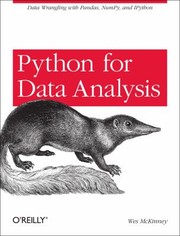 |
Python for Data Analysis | the foundation: pandas, NumPy, and Jupyter from the library's creator, free to read online first. | View on Amazon |
 |
Python Data Cleaning Cookbook | 486 pages of recipes, the most directly on-topic title here. | View on Amazon |
| Cleaning Data for Effective Data Science | the principles behind why data is dirty and what cleaning choices cost. | View on Amazon | |
 |
Python Feature Engineering Cookbook | the bridge from cleaning to models: imputation, encoding, discretization, transformation. | View on Amazon |
As an Amazon Associate I earn from qualifying purchases. Links on this page are affiliate links, and I may earn a commission at no extra cost to you.
Unlock AI That Actually Works
Get lifetime access to GPT-6 Astra, Claude Fable 5.1, Gemini 3.5, Grok 4.5, and more — all in one platform. Build websites, apps, videos, content, and digital products from a single command. No monthly fees. No tool-hopping.
Click here to get GPTAstra Max now — one-time payment, lifetime access.
Frequently Asked Questions
Which Python book should I start with for data cleaning?
If you can code a little Python, start with Wes McKinney's Python for Data Analysis (3rd edition) — it's written by the creator of pandas, teaches data manipulation, cleaning, reshaping, and exploration, and the author has made it freely available online so you can read it before buying. Pair it with the pandas user guide for current behavior (the book targets pandas 1.4, which predates pandas 3.0), then move to Michael Walker's Python Data Cleaning Cookbook (2nd edition) for recipe-style practice on missing data, inconsistent categories, outliers, and validation.
What changed in pandas 3.0 that breaks older book examples?
Two changes matter most for book code. First, string columns now use a dedicated str dtype by default instead of the NumPy object dtype, so code that selects text with select_dtypes('object') or checks dtype == object may silently find nothing — the same trap that hid a planted bug in my EDA checklist testing. Second, Copy-on-Write is now the default, so chained assignment like df['a'][mask] = 0 no longer modifies the original DataFrame; write df.loc[mask, 'a'] = 0 instead. When an example fails, read the error and the changelog for your installed version before assuming the book is wrong.
Are books targeting pandas 1.x or 2.x still worth buying?
Yes for the concepts — handling missing values, spotting outliers, validating results, and cleaning judgment stay valuable for decades — but verify the code. The practical rule: create a fresh virtual environment, install the versions the book targets, and follow along there, then port the ideas to current versions as an exercise, which teaches you more than copying code. Before buying, check the publication date and edition, look for a code repository with an issue tracker, read the table of contents and a sample chapter, check errata pages, and be wary of thin review counts — a high rating from a handful of reviewers tells you little.
Which books best prepare data for machine learning?
Cleaning for analysis and preparing data for models overlap but aren't identical. Aurélien Géron's Hands-On Machine Learning with Scikit-Learn walks through preprocessing pipelines inside complete projects — the best way to learn leak-free preparation. Soledad Galli's Python Feature Engineering Cookbook gives recipes for imputation, encoding, discretization, and transformation; Alice Zheng and Amanda Casari's Feature Engineering for Machine Learning explains the reasoning behind those techniques; and Practical Statistics for Data Scientists (Bruce, Bruce & Gedeck) covers the statistical thinking behind sampling, outliers, missing data, and distributions. Pair them with scikit-learn's preprocessing and pipeline documentation for current APIs.
Wrapping This Up
The most useful combination for most people is McKinney's Python for Data Analysis for foundations, Walker's Python Data Cleaning Cookbook for recipes, and Mertz's Cleaning Data for Effective Data Science for principles — backed by scikit-learn-focused books if your goal is machine learning, and by the current pandas, Polars, and DuckDB documentation to bridge version gaps.
Whichever you choose, library behavior changes faster than books, especially after pandas 3.0 — treat printed code as a starting point and the official docs as the source of truth for your installed versions.
Which one should you start with? If you can code a little Python, open McKinney's free online edition today, clean one messy dataset of your own, and note every place the code doesn't match your installed pandas. That exercise teaches both the techniques and the habit of verifying them.


 Join on Telegram