 Buy me a coffee
Contents
Sorted by goal, not by ranking — because the ranking's publisher always wins its own list
Try this experiment. Search for the best LLMOps courses, open a ranked list, and check which company published it. Odds are good that the publisher's own course sits at number one. Funny how that works.
I read through several 2026 course roundups, and I looked at how learners and instructors describe the main programs. This guide sorts the options by goal, so you can pick a course that fits your skills, your budget, and your calendar.
FYI: courses change fast. Prices, syllabi, and schedules shift between cohorts, so check each course page before you pay — and the syllabus you're checking against is the LLMOps production guide.
LLMOps vs LLM Engineering: What You're Learning
People mix these labels, and the difference matters when you pick a course:
- LLM engineering covers building with models: prompting, retrieval, agents, tool use, and fine-tuning.
- LLMOps covers running those systems in production: evals, tracing, deployment, versioning, cost control, and safety.
Most working engineers need both. You can't operate what you haven't built, and a clever demo without operations never survives real traffic.
What a Good Course Should Teach
Before you compare titles, check the syllabus against this list:
- Evaluation: error analysis, test sets, and LLM-as-judge methods.
- Observability: tracing, monitoring, and debugging real failures.
- Deployment: packaging, hosting, scaling, and rollout strategies.
- Cost and latency: token tracking, caching, and model routing.
- Safety and security: guardrails, prompt injection, and data handling.
- A real project: you should build and ship something, not only watch videos.
- Recency: the material should reflect current tools and practices.
IMO, evaluation is the skill most courses undersell and most teams lack. If a syllabus skips evals, keep looking.
Best Courses by Goal
If You Want a Fast, Free Overview
DeepLearning.AI's LLMOps course is a short video course taught by Erwin Huizenga of Google Cloud. Roundups describe it as free and about one to two hours long, covering data preparation, supervised fine-tuning, versioning, and safety scores through one specific pipeline.
- Best for: developers who want a quick, hands-on taste of an LLMOps pipeline.
- Watch out: it's short and tied to a Google Cloud workflow, so treat it as an appetizer, not a full meal.
DataCamp's LLMOps Concepts is a conceptual course on the LLMOps lifecycle, including ideation, RAG versus fine-tuning, and deployment. It's free to start, and DataCamp ranks it first in its own roundup. Draw your own conclusions about that.
- Best for: technical leads who want a mental map before they touch tools.
If You Want a Hands-On Project
Udacity's LLMOps course, built with Comet ML, treats LLMOps as its own subject and uses a project-based approach. Roundups describe it as free.
- Best for: developers who learn by building and want a portfolio piece.
If You Want a Structured Program
Duke University's LLMOps Specialization on Coursera runs six courses. It moves from generative AI and transformer basics to operationalizing LLMs on Azure, data engineering for retrieval, generative AI on AWS, Databricks-to-local deployment patterns, and an open-source LLMOps stack. You can audit individual courses for free, and a Coursera subscription unlocks the certificate.
- Best for: learners who want breadth across several clouds and a certificate to show.
- Watch out: a six-course program takes weeks, and cloud-specific modules age as products change.
If You Want Live Cohorts and Accountability
Maven's LLM Ops cohort course from AI Makerspace, taught by Greg Loughnane and Chris Alexiuk, uses live sessions and peer learning. It costs money, and prices vary by cohort.
AI Evals for Engineers & PMs from Hamel Husain and Shreya Shankar focuses on one critical skill. It runs about four weeks at three to five hours per week, and it teaches error analysis, evaluator design, and CI-integrated testing around a real production agent. Reviewers call it a reference course for LLM evals, and Lenny's Newsletter describes it as the highest-grossing course on Maven. It also costs the most of anything here, with reviewers quoting prices in the thousands of dollars, so check the current price and ask your employer about training budgets.
- Best for: engineers and PMs who ship prompt or model changes and want a systematic way to measure them — the skill the agent evaluation guide practices.
- Watch out: cohorts demand real time. Skip them if you can't commit.
If You Want Budget Bootcamps
Educative and Udemy both offer paid LLMOps courses, including a Udemy bootcamp with eight end-to-end projects. Quality varies a lot in this tier, so check recent reviews and the last update date before you buy.
If You're Still Building the Foundations
LLMOps assumes you already understand how LLM apps work. If you don't, start with free foundations first:
- Hugging Face's free LLM course teaches how to work with transformer models and the open-source ecosystem.
- DeepLearning.AI's short courses cover prompting, RAG, agents, and related topics in bite-size lessons.
- Andrej Karpathy's free video lectures explain how language models work from the ground up.

Figure 1: Pick by goal, not by rank — the cohort you finish beats the certificate you frame
Three Learning Paths
Pick the path that matches your situation.
Path 1: Complete Beginner (6 to 8 Weeks)
- Learn LLM basics with a free foundations course.
- Build a small RAG chatbot on your own documents.
- Take a short LLMOps overview to see the full lifecycle.
- Add tracing and a small eval set to your project.
Path 2: Engineer Shipping Now (4 Weeks)
- Start with evals. Take a focused evals course or work through its free material.
- Add observability to your existing app.
- Set up CI checks that run on every prompt change.
- Learn cost tracking and model routing — the mechanics in the cost tracking guide.
Path 3: Enterprise Cloud Team (8 to 12 Weeks)
- Take a structured program like the Duke specialization, focused on your cloud.
- Practice deployment on your company's platform.
- Add governance, security review, and access controls.
- Finish with evals so you can prove quality.
How to Judge Any Course
Use these filters before you spend money or time:
- Check the last update date. An LLMOps course from 2023 teaches a different world.
- Look for practitioners as instructors. People who run production systems teach the messy parts.
- Demand hands-on work. You should deploy, trace, and evaluate something real.
- Prefer concepts over tool tours. Tools change monthly, and concepts last years.
- Read the syllabus for evals. No evals module means a gap.
- Be skeptical of rankings. Many lists come from course sellers.
A Free Capstone Project That Beats Any Certificate
Certificates help, but a working project helps more. Build this and you'll cover most of what any course teaches:
- Build a small RAG or agent app on a topic you care about.
- Add tracing so you can inspect every request.
- Create a 30-example eval set from realistic questions:
{"input": "What's the return window?", "expect": ["states_30_day_window"], "source": "real_support_ticket"}
- Run evals in CI and block changes that make results worse:
# the capstone's crown jewel — one job that runs on every prompt change
eval-gate:
  on: [push]
  steps:
    - run: python evals/run.py --cases golden-30.json --min-pass 0.90
    - run: python evals/cost_check.py --max-usd-per-request 0.012
- Track token cost per request.
- Deploy it on a platform of your choice, with secrets handled properly.
- Write up what broke and how you fixed it.
Employers love that last step. It shows you understand failure, which is the whole job — and the same loop the LLMOps tooling exists to automate.
Mistakes I See Learners Make
- Collecting certificates instead of building. Watching videos feels like progress. Shipping creates it.
- Skipping the basics. LLMOps without LLM fundamentals leaves you guessing.
- Ignoring evals. You can't improve what you can't measure.
- Buying the priciest option first. Try free material, and pay only when you hit its limits.
- Learning one vendor's stack only. Prefer transferable concepts.
Common Pitfalls
- Ranking-first course choice — the list's publisher finishes first; filter by goal instead.
- Syllabus without evals — the most undersold skill is the one your team will lack most.
- Tool-tour learning — tools change monthly; concepts and eval methods survive the churn.
- Cohort without calendar room — live schedules demand real hours; skip if you can't commit.
- Certificate shopping — a repo with a CI-gated eval suite outranks any certificate wall.
- Stale course risk — 2023 material teaches a different model landscape; check update dates.
- Capstone never started — day one, not graduation day; the project is the course.
- No write-up — shipping without documenting leaves the interview story on the table.
Best Book to Read
| Cover | Book | Description | Get it |
|---|---|---|---|
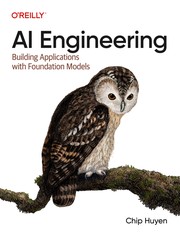 |
AI Engineering | the syllabus-level foundation: retrieval, evaluation, and serving, taught with production case studies. | View on Amazon |
 |
Hands-On Large Language Models | the code-first companion to any foundations course, from embeddings to agents. | View on Amazon |
 |
Designing Machine Learning Systems | the LLMOps lifecycle in book form: data, deployment, monitoring, and iteration. | View on Amazon |
 |
Building LLM Powered Applications | the hands-on project track in print, mirroring the capstone above. | View on Amazon |
Partner offer
Educative Unlimited: every AI course, one subscription
Interactive, browser-based courses with no local setup — a natural fit for the learning path above. One subscription unlocks the full generative AI, ML, and data catalog, so you can work through it at your own pace.
As an Amazon Associate I earn from qualifying purchases. Links on this page are affiliate links, and I may earn a commission at no extra cost to you.
Unlock AI That Actually Works
Get lifetime access to GPT-6 Astra, Claude Fable 5.1, Gemini 3.5, Grok 4.5, and more — all in one platform. Build websites, apps, videos, content, and digital products from a single command. No monthly fees. No tool-hopping.
Click here to get GPTAstra Max now — one-time payment, lifetime access.
Frequently Asked Questions
What's the difference between LLMOps and LLM engineering courses?
LLM engineering covers building with models: prompting, retrieval, agents, tool use, and fine-tuning. LLMOps covers running those systems in production: evals, tracing, deployment, versioning, cost control, and safety. Most working engineers need both, because you can't operate what you haven't built, and a clever demo without operations never survives real traffic. If a course only teaches prompts and pipelines, it stops short of production; if it only teaches dashboards, you'll lack the intuition to debug what the dashboards show. Check the syllabus against both halves before you pay.
Which LLMOps course should you take?
Match the goal. Fast free overview: DeepLearning.AI's LLMOps course with Erwin Huizenga of Google Cloud — free, about one to two hours, covering data prep, supervised fine-tuning, versioning, and safety scores through one pipeline; treat it as an appetizer. Mental map first: DataCamp's LLMOps Concepts, free to start, covering ideation, RAG versus fine-tuning, and deployment (it ranks first in DataCamp's own roundup — draw your own conclusions). Hands-on project: Udacity's LLMOps course built with Comet ML, free and project-based. Structured program: Duke University's LLMOps Specialization on Coursera — six courses across Azure, AWS, Databricks, and an open-source stack, audit-free individually, subscription for the certificate. Live cohort: AI Makerspace's LLM Ops on Maven (Greg Loughnane and Chris Alexiuk), paid and price-varied. Evals depth: AI Evals for Engineers & PMs from Hamel Husain and Shreya Shankar — about four weeks at three to five hours per week, called a reference course by reviewers and the highest-grossing Maven course per Lenny's Newsletter, in the thousands of dollars, so check the current price and ask about training budgets.
How do you judge whether a course is worth it?
Six filters. Check the last update date — an LLMOps course from 2023 teaches a different world. Look for practitioner instructors — people who run production systems teach the messy parts. Demand hands-on work — you should deploy, trace, and evaluate something real. Prefer concepts over tool tours — tools change monthly, concepts last years. Read the syllabus for evals — no evals module means a gap. And be skeptical of rankings — many lists come from course sellers. Then remember the capstone rule: a free project with tracing, a 30-example eval set, a CI gate, and a cost dashboard beats any certificate, because employers love a write-up of what broke and how you fixed it.
What learning path fits a beginner versus a shipping engineer?
Three paths cover most situations. Complete beginner (6–8 weeks): learn LLM basics with a free foundations course (Hugging Face's free LLM course, DeepLearning.AI shorts, or Karpathy's lectures), build a small RAG chatbot on your own documents, take a short LLMOps overview to see the full lifecycle, then add tracing and a small eval set. Engineer shipping now (4 weeks): start with evals — a focused course or its free material — then add observability to your existing app, set up CI checks that run on every prompt change, and learn cost tracking and model routing. Enterprise cloud team (8–12 weeks): take a structured program like Duke's on your company's cloud, practice deployment on your platform, add governance and access controls, and finish with evals so you can prove quality.
Wrapping This Up
The best course is the one you finish and apply. Start free with a short overview, add a hands-on or structured program if you need depth, and consider a cohort when you want accountability and expert feedback.
Then build something real. A project with a failing test, a fixed bug, and a cost dashboard teaches more than any lecture, and it makes a far better story in your next interview.



 Join on Telegram