 Buy me a coffee
Contents
Seven platforms, six criteria, one rule: trust what you measure, not what the ranking says
Search "best LLMOps platform" and you'll notice something funny. Every vendor's comparison ranks that vendor first. What a coincidence.
I spent time reading those lists, plus the neutral ones, so you don't have to. This guide compares the platforms that keep showing up on real shortlists, and it tells you where each one fits, where it hurts, and how to choose without trusting anyone's marketing (including mine).
FYI: this space moves fast, and I wrote this in October 2026. Check each product's current docs and pricing before you commit. The scope those products fill is the LLMOps production guide's tooling layer.
What an LLMOps Platform Actually Covers
The label stretches across a lot of territory. Most platforms handle some of these jobs and skip others:
- Tracing and observability: record every prompt, response, tool call, and latency, down to individual spans.
- Evaluation: score outputs with rules, human review, or LLM judges, offline and online.
- Prompt management: version prompts, label releases, and roll back.
- Datasets and experiments: store test cases and compare runs side by side.
- Monitoring and alerts: watch cost, latency, errors, and quality in production.
- Gateway and guardrails: route requests, cache, enforce rules at runtime.
- Deployment: host and run agents or pipelines.
No single tool does everything equally well. So the real question becomes: which jobs matter most to your team right now?
How I Judge Them
I rank platforms on six practical criteria:
- Fit with your stack: does it work with your framework, or does it demand a rewrite?
- Eval depth: can it gate a release, or does it only display charts?
- Hosting and data control: can you self-host, and how complete is that option?
- OpenTelemetry support: can you keep your trace data portable?
- Pricing model: does cost scale with seats, traces, or both?
- Vendor stability: will the product still evolve in two years?
The Contenders
Langfuse: The Open-Source Default
Langfuse leads the open-source side of this category. It covers tracing, prompt management, datasets, evaluation, and OpenTelemetry ingestion, and it works across frameworks. You can self-host it, which matters when compliance rules keep data in-house.
Big news this year: ClickHouse acquired Langfuse in January 2026. Langfuse already ran on ClickHouse's database, and the stated plan keeps the open-source commitment in place. Watch the roadmap, but the early signs look healthy.
Watch out for: reports say the free self-hosted tier lacks some enterprise features, such as role-based access control and audit logs. Confirm what your compliance team needs before you assume "free" means "complete."
LangSmith: Best If You Live in LangChain
LangSmith comes from the LangChain team, and it shows. If your app uses LangChain or LangGraph, instrumentation takes almost no effort, and the agent tracing runs deep. LangSmith also offers deployment for agents, which most competitors don't.
The platform itself is closed source, though the SDK is open. Third-party comparisons describe a per-seat pricing model, which can climb as your team grows. IMO, LangSmith earns its place when you commit to the LangChain ecosystem, and it earns less when you don't — the tracing depth is the one we mapped in the observability guide.
Braintrust: Evaluation First
Braintrust puts evals at the center. Its pitch is a closed loop: production traces become test cases, and eval failures block bad releases through CI/CD gates. It also includes an AI proxy for unified model access, which many peers lack.
The platform is a closed, hosted product, and self-hosting sits at the enterprise level. Teams that treat quality gates as non-negotiable tend to like it. Teams that need free, fully open self-hosting usually look elsewhere — the same gate shape the CI/CD for LLM apps guide wires up with plain scripts.
Arize Phoenix and Arize AX: OpenTelemetry Purists
Phoenix is Arize's open-source tool for tracing and evaluation, and it speaks OpenTelemetry natively. You can run it locally or self-host it for free. It also brings ML-style analysis, like embedding visualizations, which helps you spot failure clusters.
Managed features and heavier production monitoring live in Arize's commercial AX platform. Check Phoenix's license terms yourself, since sources describe them differently.
MLflow: The Familiar ML Platform
MLflow is Apache-2.0 licensed and widely used for classic ML lifecycle tracking. It now includes tracing, evaluation, and prompt management for GenAI. If your data science team already runs MLflow, adding LLM tracing there feels natural.
Critics note that its LLM features run shallower than purpose-built tools. Many teams pair MLflow for traditional ML with a dedicated LLM platform.
W&B Weave: For Weights & Biases Shops
Weave brings tracing and evaluation into the Weights & Biases ecosystem, and the SDK is open source. Instrumentation is simple with a decorator. If your team already tracks experiments in W&B, you get a low-friction start.
Comparison articles call its LLM evaluation younger than the specialized tools. Judge it on your own tasks — the judge-and-baseline discipline from the evaluation guide applies to tools too.
Helicone: Proxy Style, With a Big Caveat
Helicone takes a different approach. You route calls through its proxy and gain logging, caching, and gateway features without much code. That convenience attracted thousands of organizations.
Here's the catch: Mintlify acquired Helicone in March 2026, and the product now runs in maintenance mode, which means security and bug fixes only. IMO, that rules it out for a new multi-year commitment, though existing users can keep running it while they plan a move.
Quick "Best For" Cheat Sheet
- Self-hosting and open source: Langfuse, Phoenix, MLflow.
- LangChain or LangGraph apps: LangSmith.
- Eval-driven releases and CI gates: Braintrust.
- OpenTelemetry-native tracing: Phoenix, Langfuse.
- Existing ML platform users: MLflow or W&B Weave.
- New long-term projects: avoid Helicone, and prefer actively developed options.

Figure 1: The shortlist lives on your desk, not in someone's ranking — same app, same evals, two weeks
A Word About Pricing
Pricing models differ more than prices do. Some vendors charge per seat, some by usage, and some mix both. Third-party articles also quote conflicting numbers for the same product, so treat any figure you read here or elsewhere with suspicion.
Do the math yourself:
- Estimate your monthly trace or span volume.
- Count your seats, including product and support people who need access.
- Price each shortlisted platform from its own pricing page.
- Add self-hosting costs if you go open source: servers, storage, and engineering time.
Self-hosting looks free until you count the person who keeps it running. Ever notice how "free" software loves to cost salary?
Open Source or Hosted?
This choice shapes everything else, so decide it early:
- Choose open source and self-hosted when data residency, compliance, or cost at huge scale drives your decision. Expect to run infrastructure.
- Choose hosted when speed matters more than control. You trade some flexibility for zero ops work.
- Prefer OpenTelemetry-compatible tools either way, so you can switch vendors without losing your instrumentation:
from opentelemetry import trace
from opentelemetry.sdk.trace import TracerProvider

trace.set_tracer_provider(TracerProvider())          # one setup, any backend
tracer = trace.get_tracer("support_chat")

with tracer.start_as_current_span("llm.call") as span:
    span.set_attributes({
        "llm.model": model,
        "llm.prompt_version": "v14",                 # the migration-critical bits
        "llm.input_tokens": usage.input_tokens,
    })
    return generate(prompt)   # export to Langfuse, Phoenix, or anything OTel
Run a Two-Week Bake-Off
Don't pick from a blog post. Test two or three finalists on your own app:
- Instrument one real feature in each tool.
- Load 50 real test cases and run the same evals everywhere.
- Debug one actual bug using each tool's trace view, and time it.
- Wire one CI check to see how well each tool gates a release.
- Ask your team which interface they'd open voluntarily.
- Compare the real cost at your projected volume.
# bake-off scorecard — same app, same evals, one row per tool
langfuse:  { instrument_min: 15, bug_trace_min: 4, ci_gate: true,  monthly_cost: 180, team_picks: 2 }
phoenix:   { instrument_min: 25, bug_trace_min: 6, ci_gate: false, monthly_cost: 0,   team_picks: 3 }
braintrust:{ instrument_min: 20, bug_trace_min: 3, ci_gate: true,  monthly_cost: 340, team_picks: 1 }
The tool your engineers enjoy using usually wins, because tools people avoid collect no data.
Mistakes I See Teams Make
- Believing vendor-written rankings. Read the source before you trust the verdict.
- Buying for features you won't use. A simple tracing tool beats a giant suite nobody configures.
- Ignoring portability. Proprietary instrumentation makes switching painful.
- Skipping the acquisition check. Two major open-source tools changed owners in 2026, so look at ownership and roadmap activity before you commit.
- Forgetting evals. Tracing alone shows you failures. It doesn't prevent them.
Common Pitfalls
- Feature-matrix shopping — buy the two jobs you need this quarter, not the seven you might need someday.
- Vendor-comparison tunnel vision — the source of every "best of" list has a first-place finish waiting in it.
- Pricing figures from blogs — seat-to-usage math changes at your volume; price from the vendor's own page.
- Self-hosting cost amnesia — servers are the small line; the on-call person is the big one.
- Closed instrumentation — without OpenTelemetry, switching vendors means rebuilding your visibility.
- No bake-off — a two-week test on real traffic settles arguments that a week of reading can't.
- Acquisition blind spots — ownership and maintenance mode change the roadmap, not the feature list.
- Tracing-only stacks — failures on a dashboard never fix themselves; gates do.
Best Book to Read
| Cover | Book | Description | Get it |
|---|---|---|---|
 |
Designing Machine Learning Systems | how the tooling layer fits the wider system: storage, evaluation, monitoring, and the choices this comparison puts on your desk. | View on Amazon |
 |
Observability Engineering | what good tracing looks like before you score any vendor on it, from spans to OpenTelemetry portability. | View on Amazon |
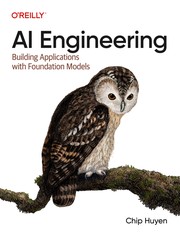 |
AI Engineering | the eval, prompt management, and monitoring practices the best platforms productize. | View on Amazon |
 |
Building LLM Powered Applications | the hands-on wiring behind each row of the cheat sheet: tracing, evals, and gates in practice. | View on Amazon |
As an Amazon Associate I earn from qualifying purchases. Links on this page are affiliate links, and I may earn a commission at no extra cost to you.
Unlock AI That Actually Works
Get lifetime access to GPT-6 Astra, Claude Fable 5.1, Gemini 3.5, Grok 4.5, and more — all in one platform. Build websites, apps, videos, content, and digital products from a single command. No monthly fees. No tool-hopping.
Click here to get GPTAstra Max now — one-time payment, lifetime access.
Frequently Asked Questions
What does an LLMOps platform actually cover?
The label stretches across a lot of territory, and most platforms handle some jobs and skip others: tracing and observability (every prompt, response, tool call, and latency, down to individual spans), evaluation (scoring outputs with rules, human review, or LLM judges, offline and online), prompt management (versioning, release labels, rollback), datasets and experiments (stored test cases, side-by-side run comparison), monitoring and alerts (cost, latency, errors, quality in production), gateway and guardrails (routing, caching, runtime rules), and deployment (hosting agents or pipelines). No single tool does everything equally well, so the real question is which jobs matter most to your team right now — start from the jobs, not the feature matrix.
Which LLMOps platform should you choose?
Match your hard constraint to the shortlist. Self-hosting and open source: Langfuse (tracing, prompts, datasets, evals, OpenTelemetry ingestion, across frameworks — acquired by ClickHouse in January 2026 with the open-source commitment stated to continue), Phoenix (OpenTelemetry-native, free local or self-hosted, ML-style embedding analysis; commercial features live in Arize AX), and MLflow (Apache-2.0, classic ML tracking now with GenAI tracing and evals, though LLM features run shallower than purpose-built tools). LangChain or LangGraph apps: LangSmith — near-zero instrumentation and agent deployment, closed source, per-seat pricing. Eval-driven CI gates: Braintrust — production traces become test cases, eval failures block releases, plus an AI proxy. Existing W&B shops: Weave. Avoid Helicone for new long-term commitments: Mintlify acquired it in March 2026 and it now runs in maintenance mode — security and bug fixes only.
How do you compare LLMOps pricing honestly?
Pricing models differ more than prices do: some vendors charge per seat, some by usage, and some mix both, and third-party articles quote conflicting numbers for the same product — so treat every figure you read (including here) with suspicion and price each shortlist candidate from its own pricing page. Do the math yourself: estimate your monthly trace or span volume, count your seats including product and support people who need access, price each platform at that shape, and if you go open source add the real self-hosting costs — servers, storage, and engineering time. Self-hosting looks free until you count the person who keeps it running; 'free' software loves to cost salary.
How do you run an LLMOps platform bake-off?
Two weeks, on your own app, two or three finalists. Instrument one real feature in each tool. Load 50 real test cases and run the same evals everywhere. Debug one actual bug using each tool's trace view and time it. Wire one CI check to see how well each tool gates a release. Ask your team which interface they'd open voluntarily — the tool your engineers enjoy usually wins, because tools people avoid collect no data. Then compare the real cost at your projected volume. Prefer OpenTelemetry-compatible instrumentation either way, so you can switch vendors without losing your data, and revisit the choice yearly because this market keeps shifting.
Wrapping This Up
There's no single best LLMOps platform, only the best fit for your stack, your compliance needs, and your team. Langfuse and Phoenix serve open-source-first teams, LangSmith serves LangChain shops, Braintrust serves eval-driven teams, and MLflow and Weave serve existing ML platforms.
Pick two finalists, test them on your own data, and trust what you measure. Then ignore every list that ranks its author first.



 Join on Telegram