 Buy me a coffee


Contents
Figure 1: Best Simulation Software for OR and Logistics — your warehouse adds a second shift and a new conveyor. Will it fix the bottleneck, or just move it to packing?
Your warehouse adds a second shift and a new conveyor. Will it fix the bottleneck, or just move it to packing? You could spend $400,000 to find out, or you could build a model and test it for the price of a software license. Simulation software lets you break your system on a screen before you break it on the floor.
I cannot claim I have built production models in every tool below, so I will give you my honest analysis instead. I also searched for current information, and the rankings disagree with each other. One roundup puts AnyLogic first for logistics simulation, while another ranks FlexSim first for discrete event modeling. That disagreement tells you the "best" tool depends on your problem, not on a leaderboard. Ready to sort it out?
Why Simulation Belongs in Your OR Toolkit
Optimization solvers find the best answer to a model you write down. Simulation shows you how a system behaves when randomness, queues, and interactions pile up. Real operations have both, and the two methods complement each other.
Simulation shines when:
- Variability matters: arrival times, breakdowns, and processing times all fluctuate
- Interactions dominate: one slow station backs up the whole line
- You need to test policies: dispatch rules, staffing levels, or layout changes
- Stakeholders need to see it: an animation convinces people faster than a spreadsheet
Ever watched an average-based plan collapse because the averages hid the queues? Simulation exists for that moment.
Three Simulation Styles You Should Know
Discrete-Event Simulation (DES)
DES models a system as a sequence of events: an order arrives, a forklift picks it up, a machine finishes. It fits warehouses, factories, ports, and service systems best, and most tools below center on it.
Agent-Based Modeling
Agent-based models give individual actors their own behavior, like drivers, customers, or robots. They help when decisions and interactions drive the outcome.
System Dynamics
System dynamics models aggregate flows and feedback loops, like inventory levels across a supply chain over months. It suits strategic, high-level questions.
Some tools combine all three. One source describes AnyLogic as letting discrete-event, system dynamics, and agent-based modeling run together in one model. Gitnux
What Should You Look For?
Every vendor promises "digital twins" and "AI-powered insights." So what should you test?
Here is my checklist:
- Modeling approach: does it support the methods your problem needs?
- Ease of use: can your team build models without a month of training?
- Statistical tools: input distribution fitting, replications, confidence intervals, and warm-up handling
- Experimentation: scenario comparison and parameter sweeps
- Visualization: 2D or 3D animation for validation and stakeholder buy-in
- Integration: database, spreadsheet, and API connections, plus links to optimizers
- Scalability: how big a model it runs before slowing down
- Licensing and cost: this varies widely, so ask for specifics
Best Commercial Simulation Platforms
AnyLogic: Multi-Method Flexibility
AnyLogic stands out for combining simulation methods in a single environment, and it offers code-level control through Java. One roundup describes it as providing discrete-event modeling and animation with Java API control for inventory and supply chain behavior. That power suits analysts who want custom logic, hybrid models, and supply chain network studies. Gitnux
What I like:
- Hybrid modeling for problems that mix individual agents and aggregate flows
- Strong supply chain and transport use cases
- Java extensibility for custom behavior
What to check: custom logic means a steeper learning curve for non-programmers.
Simio: Reusable Objects and Scheduling
Simio uses an object-oriented approach, so you build reusable components for resources and routing. One source says Simio supports discrete-event, agent-based, and continuous approaches for analyzing systems under variability and uncertainty. It also positions itself for scheduling use, which helps when you want one model for planning and analysis. Gartner
The tradeoff is learning curve. A comparison I found notes that the learning curve increases with custom logic and advanced animation detail. Gitnux
FlexSim: 3D Material Flow
FlexSim focuses on visual, 3D discrete-event modeling for warehousing, manufacturing, and material handling. One description calls it a visual, object-based discrete-event tool with a 3D digital twin workflow for manufacturing, logistics, and material handling. I would put it high on the list for warehouse layouts, conveyor systems, and AGV studies, where seeing the flow helps everyone agree. Gitnux
Arena: The Classic Workhorse
Arena has a long history in operations research courses and industry studies. Roundups describe it as a tool for discrete-event simulations of operations and logistics with process modeling, scenario analysis, and experiment support. It suits manufacturing and logistics teams validating throughput and capacity. Check current licensing and version details, since vendors change them. Gitnux
Witness, Simul8, and Others
Witness targets industrial simulation, and Simul8 emphasizes quick deployment for business users without deep technical backgrounds. Siemens also offers tools like Tecnomatix Plant Simulation for teams in that ecosystem. Evaluate these when their niche matches your needs. FitGap
Best Free and Open-Source Options
Budget tight, or you love code? You have solid choices.
SimPy: Python DES for Analysts
SimPy is a Python framework for discrete-event simulation. One roundup lists it as a developer-focused framework for event-driven and discrete-event simulation. It integrates naturally with pandas, NumPy, and optimization libraries, so it suits OR teams already living in Python. You also get full version control and reproducibility. Gitnux
The downside: no built-in animation, so you build your own visualization and validation tools.
JaamSim: Open-Source Graphical DES
JaamSim offers graphical model building with 3D output for free. A roundup describes it as an open-source alternative for manufacturing and logistics teams that want fast model building with traceable behavior debugging. It fits teams that want a visual tool without license fees. Gitnux
Quick Comparison
Here is my fast take on who fits where:
- AnyLogic: best for hybrid models and supply chain networks
- Simio: best for reusable models that link to scheduling
- FlexSim: best for 3D warehouse and material handling studies
- Arena: best for classic process and capacity analysis
- Simul8: best for fast, business-user-friendly models
- SimPy: best for Python-based, code-first OR teams
- JaamSim: best for free graphical DES
How to Choose the Right Tool
Skip the feature matrix for a minute. Start with three honest questions.
What Question Are You Answering?
Layout and throughput studies point toward FlexSim, Simio, or Arena. Supply chain networks and mixed-behavior systems point toward AnyLogic. Algorithm research and integration with optimizers point toward SimPy.
Who Will Build and Maintain Models?
Engineers who code can handle SimPy or AnyLogic. Analysts who prefer drag-and-drop may favor FlexSim or Simul8. Match the tool to your team's real skills, not the skills you plan to hire.
How Will You Use the Results?
If you need executive buy-in, animation helps a lot. If you need thousands of automated experiments feeding an optimizer, scriptability matters more than visuals.
How to Run a Fair Trial
Don't trust demos. Follow this protocol:
- Pick a real problem: a warehouse, a line, or a dispatch policy you already understand
- Build the same model in each tool, using identical inputs
- Validate against reality: does the model reproduce current throughput and queue lengths?
- Run proper experiments: multiple replications, warm-up periods, and confidence intervals
- Time the work: how long did building and changing the model take?
- Test a scenario change, like adding a worker or a conveyor, and see how easily you can compare
Did you notice how few of those steps involve reading a feature list?
Common Mistakes to Avoid
- Trusting software rankings. The roundups I found disagree on the top pick, and many reviews use opaque scoring. Test with your own problem.
- Skipping validation. A pretty animation of a wrong model is worse than no model.
- Using averages as inputs. Fit real distributions, or the model hides the variability you wanted to study.
- Running one replication. A single run is an anecdote. Run many and report confidence intervals.
- Ignoring warm-up. Starting from an empty system biases your results.
- Overbuilding. Model only the detail your question needs.
- Forgetting data effort. Collecting cycle times and arrival data often takes longer than building the model.
Best Book to Read
| Cover | Book | Description | Get it |
|---|---|---|---|
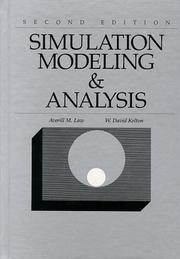 |
Simulation Modeling and Analysis | the definitive textbook on simulation methodology, statistical design, and the theory behind every tool on this list. | View on Amazon |
As an Amazon Associate I earn from qualifying purchases. Links on this page are affiliate links, and I may earn a commission at no extra cost to you.
Read it after you have run your trials. It makes the difference between "this tool ran a simulation" and "this model actually answers my question" impossible to confuse.
Final Thoughts
The best simulation software is the one your team can validate, trust, and update. Python-fluent OR teams should start with SimPy, warehouse and material-flow projects with FlexSim or Simio, and hybrid supply chain studies with AnyLogic. Pay for heavier tools only when free ones hit a wall.
So pick one real bottleneck this week and model it in two tools. If one version predicts your current performance and helps you test a fix, you found a keeper. If both models disagree with reality, congratulations: you just learned something your spreadsheet never told you.
Frequently Asked Questions
What is the difference between discrete-event simulation and agent-based modeling?
Discrete-event simulation (DES) models a system as a sequence of events (arrivals, completions, failures) and fits warehouses, factories, and queues. Agent-based modeling gives individual actors (drivers, robots, customers) their own behavior rules and shines when interactions and decisions drive outcomes.
Which simulation tool is best for a Python-based OR team?
SimPy is the top choice for code-first teams already using Python. It integrates with pandas, NumPy, SciPy, and optimization libraries, and offers full version control. The tradeoff is no built-in animation — you build your own visualization.
Can free tools like SimPy and JaamSim handle production-scale models?
Yes. SimPy handles large discrete-event models and is used in research and industry. JaamSim offers graphical model building with 3D output at no cost. The main limits are missing vendor support, built-in statistical analysis, and enterprise integrations.
What is hybrid simulation and when do I need it?
Hybrid simulation combines discrete-event, agent-based, and system dynamics methods in one model. AnyLogic is the main commercial platform for this. Use it when your problem mixes individual agent decisions (e.g., truck routing) with aggregate flows (e.g., supply chain inventory).
How should I test simulation software before buying?
Build the same real problem in each tool with identical inputs. Validate against current throughput and queue lengths. Run proper experiments with replications, warm-up, and confidence intervals. Time the build and change cycle. Test a scenario change to see how easily you can compare results.
Sources
[1]Averill M. Law and W. David Kelton, Simulation Modeling and Analysis — the definitive textbook on simulation methodology: Amazon search[2]Gitnux, Logistics Simulation Software: Market Analysis — vendor comparison and feature breakdown: gitnux.org/best/logistics-simulation-software[3]Gitnux, Discrete Event Simulation Software: Top Picks — DES tools and use cases: gitnux.org/best/discrete-event-software[4]Gitnux, Operations Simulation Software: AnyLogic and Competitors — hybrid modeling and multi-method tools: gitnux.org/best/operations-simulation-software[5]Gitnux, Inventory Simulation Software: Tools and Vendors — supply chain simulation focus: gitnux.org/best/inventory-simulation-software
Related Articles
- Best Route Optimization Software for Delivery Fleets (2026)
- Best Production Scheduling Software for Manufacturers (2026)
- Vehicle Routing with Reinforcement Learning: Can a Neural Policy Beat Heuristics?
- OR-Tools vs Reinforcement Learning: When a Solver Actually Wins
- Q-Routing Explained: Reinforcement Learning for Packet Routing in Networks


 Get Free Course Notes →