 Buy me a coffee

Contents
Figure 1: Free AI Ethics Courses: Best No-Cost Options to Get Started — three verified courses, three role-based paths, and one artifact that beats a stack of certificates
You do not need a university budget to learn AI ethics. Several solid courses cost nothing, and some of the best ones come from universities that decided ethics education should not sit behind a paywall.
The trouble is sorting signal from noise. Search for "free AI ethics course" and you will find a pile of listicles, vendor webinars, and "free" courses that charge for the certificate.
This guide covers the free options that hold up, who each one suits, and how to turn a course into real skill. I verified some courses against their own pages during this research and describe others from my own knowledge, and I mark which is which. Availability and terms change, so check each course page before you start.
Who Needs AI Ethics Training
AI ethics matters well beyond philosophers and policy teams. These groups benefit most:
| Group | Why it matters | What they need |
|---|---|---|
| ML engineers and data scientists | They make design choices that affect real people | Practical methods: testing, documentation, monitoring |
| Product managers | They decide what to build and when to ship | Trade-off framing and a review process |
| Managers and executives | They set priorities and accept risk | Risk language and sign-off discipline |
| Policy, legal and compliance staff | They need technical fluency to regulate or advise | Technical basics plus case studies |
| Students and career changers | They want a credible foundation | A structured course and one artifact |
Your role decides which course fits. An engineer needs practical methods, and a policy analyst needs frameworks and case studies. A single course that serves both usually serves neither well.
What a Good Introductory Course Covers
Check the syllabus for these themes:
- Core principles: fairness, accountability, transparency, privacy and safety.
- Real cases: concrete examples of harm, like biased hiring or lending tools.
- Methods: how to test, document and monitor systems, not only how to discuss them.
- Human rights and society: who gains, who loses and who gets a say.
- Practice: exercises that make you apply ideas to a scenario.
In my view, the best courses make you do something uncomfortable, like decide between two defensible but conflicting principles. Courses that only define terms leave you with vocabulary and no judgment.
Courses I Verified
| Course | Provider | Cost | Best for |
|---|---|---|---|
| Ethics of AI | University of Helsinki | Free, self-paced | Beginners, non-engineers, public sector |
| Practical Data Ethics | fast.ai | Free | Practitioners who want applied material |
| Elements of AI | University of Helsinki and Reaktor | Free | Complete beginners who need AI basics first |
Ethics of AI (University of Helsinki)
The University of Helsinki offers a free, self-paced online course called Ethics of AI, designed for anyone interested in the ethical side of AI, with no programming required. Helsinki built it with partners that include the cities of Helsinki, Amsterdam and London, and Finland's Ministry of Finance, so many exercises use cases from public administration.
The course site lists seven chapters:
- Introduction
- Non-maleficence
- Accountability
- Transparency
- Human rights
- Fairness
- AI ethics in practice
Course pages from universities that use it for credit say that learners get a certificate automatically in their profile after completing the course.
- Best for: anyone starting from scratch, especially non-engineers, managers and public-sector staff.
- Watch out: it focuses on ethical reasoning more than on technical audit methods, so engineers should pair it with a hands-on resource.
The public-administration case load is the reason to pick this one over a generic principles course. Municipal services are where abstract trade-offs become concrete: who gets a benefit, who gets flagged, and who has to appeal.
Practical Data Ethics (fast.ai)
fast.ai offers a free data ethics course, listed in announcements as applied data ethics, that focuses on issues that are both urgent and practical. The group describes itself as self-funded and provides its courses, libraries and research with no ads. I could not open the current syllabus in this research, so check fast.ai's site for the latest version and format.
- Best for: practitioners who want case-driven, applied material.
Elements of AI (University of Helsinki and Reaktor)
Elements of AI is a free online course that offers basic information on AI without requiring prior knowledge or coding. It is not an ethics course as such, and it works well as a first step if you need AI fundamentals before you tackle ethics material. Check the current site for how it handles societal implications.
- Best for: complete beginners who want AI basics first.
Other Free Options (From My Own Knowledge)
I did not verify these in this research, so confirm what is currently available:
| Option | What it is | Caveat |
|---|---|---|
| Kaggle Learn's introduction to AI ethics | A short, free, hands-on micro-course aimed at people who work with data and models, with exercises on bias and model cards | Verify the current module list |
| Google's Machine Learning Crash Course | Includes material on fairness, and it is free | Engineering-oriented, not an ethics curriculum |
| Microsoft Learn and Google Cloud responsible AI paths | Free learning paths that teach each company's responsible AI approach | Vendors teach their own framing |
| University courses on edX and Coursera | Many let you audit lectures for free, with fees for graded work or certificates | Terms change, so check each course page |
| BlueDot Impact and the Center for AI Safety | Free AI safety courses and introductory materials | Better suited to the safety and alignment research path than to everyday product ethics |
Three Learning Paths
Path 1: Engineer or Data Scientist (4 Weeks)
- Week 1: take a principles course like Ethics of AI, or at least its fairness and accountability chapters.
- Week 2: work through a hands-on resource on bias and model documentation.
- Week 3: run a small fairness audit on a public dataset.
- Week 4: write a model card for your project, and share it.
Path 2: Product Manager or Leader (3 Weeks)
- Week 1: take the full Ethics of AI course for the vocabulary and the cases.
- Week 2: read one risk framework, like the NIST AI Risk Management Framework, and map it to a product you own.
- Week 3: hold a pre-launch ethics review for a real feature, using a simple checklist.
Path 3: Policy, Legal or Compliance (3 Weeks)
- Week 1: take a principles and human rights course.
- Week 2: learn the technical basics, using a short AI fundamentals course.
- Week 3: review a real system's documentation, and write the questions you would ask its builders.
Path 3 is the one people skip, and it produces the most useful output. A list of questions a non-engineer would ask about a model card is often the fastest way to find the gaps in it.
How to Turn a Free Course Into Real Skill
Watching videos will not change your decisions. Applying ideas will.
- Pick a real system you work on or care about, and apply each chapter to it.
- Write short notes on what you would change.
- Discuss with someone. Ethics skills grow through argument, so find a colleague or study partner.
- Build an artifact: a model card, a risk register or a fairness audit report.
- Revisit after a real decision. Reread the material after your next launch or incident.
A Capstone Project
Here is a project that works as a portfolio piece:
- Choose a public dataset with a decision attached, like credit or hiring data.
- Train a simple model.
- Audit it: compute per-group metrics with confidence intervals, and check for proxies.
- Document it: write a model card with intended use, limits and findings.
- Propose mitigations, and discuss the trade-offs honestly.
- Publish it in a repository or blog post.
My guides on fairness principles, real bias cases and the four-fifths rule give you the framework for each step. Step 3 is where the course stops and your own judgment starts, and it is the step interviewers ask about.
How to Judge a Free Course
- Check the source. University and non-profit courses usually offer more independent perspective than vendor courses.
- Look at the update date. AI ethics moves quickly, and a 2019 course may miss generative AI.
- Read the syllabus for cases and exercises, not only definitions.
- Check what costs money. Some "free" courses charge for certificates or graded work.
- Watch for sales funnels. A free course that exists to sell a product teaches that product's worldview.
- Prefer courses that include disagreement. Ethics involves trade-offs, and honest courses show them.
Do Certificates Matter?
A certificate shows that you finished a course. It rarely proves skill. Employers care more about what you can show: an audit, a model card, or a thoughtful write-up. Treat a free certificate as a bonus and a project as the main deliverable.
That is also the argument for putting the artifact first when you plan your study time. Two weeks of course plus one week of building beats four weeks of course and nothing to show.
Common Pitfalls
- Collecting courses. Finish one and apply it before you start another.
- Staying abstract. Tie every idea to a system you know.
- Skipping the technical side as an engineer, or the conceptual side as a manager.
- Treating ethics as a checklist. The hard part is judgment under trade-offs.
- Ignoring local rules. Laws and norms differ by region, so check requirements for your context.
- Confusing a certificate with competence. A finished course and a defensible decision are different achievements.
Quick-start checklist:
[ ] role-based path chosen from the three above
[ ] starting course picked and its terms checked (free vs paid certificate)
[ ] hands-on resource added if you work with data or models
[ ] each chapter applied to a real system
[ ] one artifact produced: model card, risk register or audit
[ ] work shared and critique invited
[ ] learning revisited after your next major decision
Best Book to Read
Three books pair well with the courses, and none of them require a technical background:
| Cover | Book | Description | Get it |
|---|---|---|---|
 |
Ethics of Artificial Intelligence | edited by S. Matthew Liao — an anthology that covers the same ground as a principles course but with the arguments left in. Useful when a course gives you a position without the case against it. | View on Amazon |
 |
The Alignment Problem | the best narrative account of how machine learning systems fail to do what we mean, which is the technical half that ethics courses often skip. | View on Amazon |
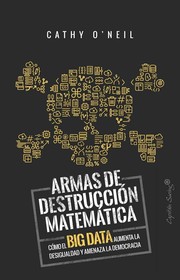 |
Weapons of Math Destruction | the most accessible case book on algorithmic harm, and a good companion for the capstone project. | View on Amazon |
Check the edition date before you buy. Courses and frameworks move faster than print, so treat any book as background rather than as the current state of the rules.
Partner offer
Educative Unlimited: every AI course, one subscription
Interactive, browser-based courses with no local setup — a natural fit for the learning path above. One subscription unlocks the full generative AI, ML, and data catalog, so you can work through it at your own pace.
As an Amazon Associate I earn from qualifying purchases. Links on this page are affiliate links, and I may earn a commission at no extra cost to you.
Unlock AI That Actually Works
Get lifetime access to GPT-6 Astra, Claude Fable 5.1, Gemini 3.5, Grok 4.5, and more — all in one platform. Build websites, apps, videos, content, and digital products from a single command. No monthly fees. No tool-hopping.
Click here to get GPTAstra Max now — one-time payment, lifetime access.
Frequently Asked Questions
Are AI ethics courses really free?
Several are, genuinely free and without a paywall. The University of Helsinki's Ethics of AI is free and self-paced, Elements of AI is free, fast.ai's data ethics material is free, and Google's Machine Learning Crash Course includes fairness content at no cost. The catch is that some free courses charge for a certificate or for graded assignments, and vendor courses are free because they teach you to buy something. Read the terms before you start rather than after you finish.
Which free AI ethics course is best for beginners?
Ethics of AI from the University of Helsinki is the best structured starting point for beginners, especially non-engineers, because it requires no programming and works through seven chapters from non-maleficence to fairness and practice. If you need AI fundamentals before ethics, Elements of AI from the same university and Reaktor is the right first step. Engineers who already have the basics should go straight to applied material and a hands-on audit instead.
Do free AI ethics certificates matter to employers?
Rarely on their own. A certificate shows you finished a course, not that you can judge a trade-off, and an employer interviewing for an AI governance or ML role will learn more from one artifact than from five certificates. A model card, a fairness audit on a public dataset or a written risk assessment for a real system demonstrates the skill directly. Treat the certificate as a bonus and the project as the deliverable.
How long does it take to learn AI ethics?
A structured foundation takes a few weeks of part-time study, which is why the learning paths here are three to four weeks rather than a year. Ethics of AI is self-paced and most people finish the chapters in that window. The part that takes longer is judgment: applying each chapter to a real system, writing down what you would change, and arguing about it with someone who disagrees. That is the work no course can compress.
Is the University of Helsinki Ethics of AI course free and certified?
The course is free and self-paced, with no programming required, built with partners including the cities of Helsinki, Amsterdam and London and Finland's Ministry of Finance. Course pages from universities that use it for credit say learners receive a certificate automatically in their profile after completing it. Confirm the current terms on the course site, because certificate handling and credit options are the parts most likely to change.
Can I learn AI ethics without a technical background?
Yes, and several good options are built for exactly that. Ethics of AI needs no programming, and the policy and product paths in this guide assume no engineering experience. You will still need enough technical vocabulary to ask a builder what their model predicts and how they tested it, which a short AI fundamentals course covers. The reverse is also true: engineers should not skip the conceptual material, because the hard part is judgment under competing principles.
Sources
- Ethics of AI, University of Helsinki — the seven-chapter course site.
- Elements of AI, University of Helsinki and Reaktor — the free AI fundamentals course.
- fast.ai — the applied data ethics material and course list.
- Google Machine Learning Crash Course — the free course that includes fairness modules.
- Kaggle Learn — the platform for the short hands-on micro-courses.
- Microsoft Learn — the responsible AI learning paths.
- edX artificial intelligence courses and Coursera AI ethics courses — audit access and certificate terms vary per course.
- NIST AI Risk Management Framework — the framework referenced in Path 2.
Links checked on 21 October 2026. Course catalogs, certificate fees and audit access change without notice, so verify the terms on the provider's page before you plan around them.
Wrapping Up
You can build a credible foundation in AI ethics for free. The University of Helsinki's Ethics of AI course gives non-engineers and beginners a structured start, fast.ai's applied data ethics material offers practical depth, and a few hands-on micro-courses fill in the technical side.
Pick one course, apply it to a real system, and produce one artifact. That small project will teach you more than a stack of certificates, and it gives you something concrete to talk about when someone asks what you actually know.
Which course will you start this week, and what artifact will you have at the end of it?



 Join on Telegram