 Buy me a coffee

Contents
Figure 1: The right resource depends on whether you need the why, the how, or the structure — most people need all three in that order
The right book or course beats another month of hyperparameter tuning
A fancy model fed sloppy features loses to a plain model fed good ones. Everyone nods at that, and then they spend weeks tuning hyperparameters anyway.
Feature engineering is the unglamorous skill that fixes this. It covers turning raw columns into inputs a model can use: encoding categories, handling missing values, scaling numbers, and extracting signal from dates and text. Here are the books and courses worth your time, and who should skip which.
What Good Learning Material Should Cover
Before you buy anything, check that it teaches the basics that actually move results:
- Missing data: how to impute, and when not to.
- Categorical encoding: one-hot, ordinal, and target-based methods.
- Scaling and transforms: standardization, log transforms, and binning.
- Dates, text, and interactions: features that raw tables hide.
- Pipelines: doing all of it without leaking test data into training.
That last item matters more than most beginners expect. A leaky pipeline gives you great validation scores and a terrible production model. IMO, any resource that ignores leakage isn't worth your money.
Best Classic Book: Feature Engineering for Machine Learning
Feature Engineering for Machine Learning by Alice Zheng and Amanda Casari (O'Reilly, April 2018) is the standard recommendation. O'Reilly's page lists it at 215 pages, labels it beginner to intermediate, and says the examples use NumPy, pandas, scikit-learn, and Matplotlib.
It covers:
- Numeric handling: filtering, binning, scaling, and log and power transforms
- Text techniques: bag-of-words, n-grams, and phrase detection
- Categorical encoding, including feature hashing and bin-counting
- PCA, and k-means as a featurization method
- Image feature extraction, both manual and deep-learning based
- A closing chapter that applies several techniques to a real structured dataset
The book is short and concept-driven, which is its strength. The catch is its age: it's from 2018, so it won't show you the newest library APIs. Read it for the ideas, then check current documentation for the code.
Best Hands-On Book: Python Feature Engineering Cookbook
Python Feature Engineering Cookbook, Second Edition by Soledad Galli (October 2022) takes a recipe-style approach. O'Reilly's description says it covers missing data, scaling and transforming numerical variables, end-to-end pipelines, and features from text and time series.
Pick this one if you learn by copying a working example and then adapting it. It's more practical than the Zheng and Casari book, and it's newer. The trade-off is that cookbooks teach you how, not always why — so pair it with the classic if you want both.
Best Paid Course: Feature Engineering for Machine Learning (Train in Data)
Soledad Galli, the same author, also teaches Feature Engineering for Machine Learning on her Train in Data site. The course listing says it covers imputation, variable encoding, discretization, feature extraction, datetime handling, and outliers.
The page lists it at $39.99, and a five-course specialization at $149.99. It doesn't give hours for this specific course; it says only that each course in the series has more than 10 hours of video.
Here's the catch: it isn't for true beginners. The prerequisites include basic Python and machine learning knowledge — you should know linear and logistic regression, random forests, and gradient boosting, and be comfortable with NumPy, pandas, Matplotlib, and scikit-learn. Prices change, so check the page before buying. FYI: Galli also maintains the feature-engine library, so she is selling a course on a tool she built. That doesn't make it bad, but weigh it.
Best Free Course: Kaggle Learn
Kaggle has a Feature Engineering course whose tagline reads "Better features make better models. Discover how to get the most out of your data." That's all that was verifiable from the listing page — lesson list, length, and prerequisites weren't exposed. Open it yourself, since it's free, and it fits neatly alongside Kaggle's notebooks and datasets.
Best Free Reference: The scikit-learn Docs
Don't overlook the documentation you'll use anyway. The scikit-learn preprocessing guide covers the main tools in one place:
- Scaling:
StandardScaler,MinMaxScaler,MaxAbsScaler, andRobustScalerfor data with outliers. - Categorical encoding:
OrdinalEncoder,OneHotEncoder, andTargetEncoder. - Binning:
KBinsDiscretizer, with uniform, quantile, or kmeans strategies. - Interactions and curves:
PolynomialFeaturesandSplineTransformer.
The guide's own example shows the rule that prevents leakage: fit the scaler on training data, then reuse it on test data. In practice that rule looks like this:
from sklearn.pipeline import Pipeline
from sklearn.preprocessing import StandardScaler
from sklearn.impute import SimpleImputer
from sklearn.ensemble import RandomForestClassifier

pipe = Pipeline([
    ("impute", SimpleImputer(strategy="median")),
    ("scale", StandardScaler()),
    ("model", RandomForestClassifier()),
])

# fit happens on the training fold only — never on the full dataset
pipe.fit(X_train, y_train)
score = pipe.score(X_test, y_test)
It won't teach you intuition, but it's accurate, current, and free.
A personal note on why that rule matters: in one early churn project, imputation medians and a target-encoded category were computed on the full dataset before the cross-validation split. The validation score looked excellent — and then production performance collapsed, because the model had been quietly memorizing information it would never see at inference time. Moving every learned step inside a Pipeline dropped the reported score by several points and made it honest. A lower honest score is worth more than a flattering number that evaporates in production — and that is exactly the bug a good resource teaches you to avoid.
Honest Comparison
| Resource | Best for | Cost | Catch |
|---|---|---|---|
| Zheng and Casari book | Concepts and intuition | Book price | Published in 2018 |
| Galli's Cookbook | Working code recipes | Book price | Less "why" than "how" |
| Train in Data course | Structured video learning | $39.99 listed (check) | Assumes ML basics |
| Kaggle Learn course | Free, quick start | Free | Details unverified here |
| scikit-learn docs | Accurate API reference | Free | Reference, not teaching |
A Practical Way to Use These
You don't need all five. Try this order:
- Read the concepts first. Start with Zheng and Casari, or skim the scikit-learn guide's headings if you're short on time.
- Code along. Take a Kaggle dataset and apply one technique at a time. Measure with cross-validation after each change.
- Use recipes for speed. Reach for the Cookbook when you need working code for imputation or time features.
- Pay only when you need structure. If you want guided video, the Train in Data course is the paid pick, provided you meet the prerequisites.
Keep a changelog of each feature you add and the score change it caused. You'll learn faster from that list than from any chapter.
Common Pitfalls
- Buying the course before reading the prerequisites and never opening the videos.
- Learning techniques without learning leakage — the fastest way to trust a score that isn't real.
- Copying recipes without measuring them — every feature should earn its place via cross-validation.
- Treating a 2018 book's code as current API — the ideas hold, the syntax may not.
- Doing everything by hand before mastering pipelines — manual preprocessing doesn't transfer to production.
- Collecting resources instead of practicing — three unfinished books beat nothing; one finished dataset beats all three.
Best Book to Read
| Cover | Book | Description | Get it |
|---|---|---|---|
 |
Feature Engineering for Machine Learning | the classic, concept-driven guide: filtering, binning, transforms, text features, encoding, PCA, and a closing end-to-end chapter. | View on Amazon |
 |
Python Feature Engineering Cookbook | recipe-style, hands-on coverage of missing data, scaling, transforms, pipelines, text, and time series features. | View on Amazon |
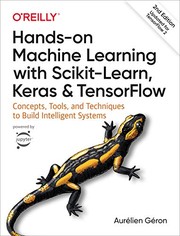 |
Hands-On Machine Learning with Scikit-Learn, Keras, and TensorFlow | the broader ML context around feature work, with the end-to-end project chapters that show where preprocessing sits in a real workflow. | View on Amazon |
 |
Feature Engineering and Selection | a free, statistically grounded companion on transforming and selecting predictors, strong on the reasoning behind each method. | View on Amazon |
Partner offer
Educative Unlimited: every AI course, one subscription
Interactive, browser-based courses with no local setup — a natural fit for the learning path above. One subscription unlocks the full generative AI, ML, and data catalog, so you can work through it at your own pace.
As an Amazon Associate I earn from qualifying purchases. Links on this page are affiliate links, and I may earn a commission at no extra cost to you.
Unlock AI That Actually Works
Get lifetime access to GPT-6 Astra, Claude Fable 5.1, Gemini 3.5, Grok 4.5, and more — all in one platform. Build websites, apps, videos, content, and digital products from a single command. No monthly fees. No tool-hopping.
Click here to get GPTAstra Max now — one-time payment, lifetime access.
Frequently Asked Questions
What is the best book for learning feature engineering?
For concepts and intuition, Feature Engineering for Machine Learning by Alice Zheng and Amanda Casari (O'Reilly, 2018) remains the standard — short, concept-driven, and honest about what each technique does. For working code you can copy and adapt, Python Feature Engineering Cookbook, Second Edition by Soledad Galli (2022) is the more practical pick. Read the first for the why and keep the second for the how; together they cover most of what a working practitioner needs.
Is the Train in Data feature engineering course worth it?
It is the structured, paid option: the course listing covers imputation, variable encoding, discretization, feature extraction, datetime handling, and outliers, listed at $39.99 (confirm current pricing). The prerequisites are the catch — basic Python plus working knowledge of linear and logistic regression, random forests, gradient boosting, and the NumPy, pandas, Matplotlib, and scikit-learn stack. If you already train models and want guided video, it fits; if you are new to ML, start free instead.
Are there good free feature engineering resources?
Yes. Kaggle's free Feature Engineering course pairs naturally with Kaggle's notebooks and datasets for hands-on practice, and the scikit-learn preprocessing guide is the accurate, current reference for scalers, encoders, binning, polynomial features, and splines. The documentation's own example demonstrates the leakage rule that matters most: fit the scaler on training data, then reuse it on test data.
How do I practice feature engineering without creating data leakage?
Put every data-dependent step inside a scikit-learn Pipeline so transformers are fit only on the training fold. Imputation medians, scaling parameters, target encoding, and bin boundaries are all learned from data — computing them before cross-validation leaks test information into training and inflates your scores. Fit on training data, transform test data, and measure each new feature's effect with cross-validation and a changelog so you know what actually helped.
Wrapping This Up
Good features beat clever models more often than people admit. Start with Zheng and Casari for ideas, use Galli's Cookbook for code, take the Kaggle course for free practice, and keep scikit-learn's docs open. Pay for a course only if you want video structure and already know the basics.
Pick one dataset today, apply a single new feature, and see whether your cross-validation score moves.



 Join on Telegram