 Buy me a coffee
Contents
The shelf is new, the churn is real — here's what survives it
Technical books about LLMs face an awkward problem. Publishing takes months, the field changes weekly, and some chapters age faster than milk.
So which books survive? The ones that teach durable ideas: how models work, how to design systems around them, and how to measure whether those systems do their job. Tool tutorials expire, but principles don't. This guide sorts the books that keep showing up on serious reading lists, explains who each one fits, and flags where the shelf runs thin — a book-length companion to the evaluation courses guide on this site. Most "best books" lists come from bloggers and affiliate sites, so titles here were cross-checked across several sources, with the occasional reliance on direct knowledge noted.
How to Choose a Book
Ask three questions before you buy anything:
- What do you want to do? Understand model internals, build applications, or run systems in production?
- How do you learn best? Visual explanations, code you type yourself, or system-level design thinking?
- How current must it be? Application-layer books age faster than books about transformers.
The right order is usually: understand the model, build an application, then learn to evaluate and operate it. Many people try to read in reverse and wonder why the evaluation chapters feel abstract.
The Essential: AI Engineering by Chip Huyen
AI Engineering: Building Applications with Foundation Models (O'Reilly) shows up first on almost every 2026 list. Chip Huyen also wrote Designing Machine Learning Systems, and this book applies the same systems thinking to foundation models you didn't train yourself.
The book focuses on the application layer: prompting, retrieval, fine-tuning, inference optimization, architecture, and user feedback. It also gives evaluation serious space, including chapters on evaluation methodology and on evaluating AI systems. Reviewers call out its coverage of how to measure application quality.
- Best for: engineers and technical leads who build LLM applications and need a system-level view.
- Watch out: one reviewer notes that the companion repository holds summaries and resources, not runnable code listings, so don't expect a code-along book.
Books That Teach How Models Work
Hands-On Large Language Models (Alammar and Grootendorst)
Hands-On Large Language Models, this O'Reilly book from 2024, explains language models with abundant visuals and practical examples. Jay Alammar became known for illustrated explanations of transformers, and the book carries that style forward. Roundups list it for beginners through intermediate readers, and its repository contains code you can run.
- Best for: visual learners who want to understand what the model does, then use it.
Build a Large Language Model (From Scratch) (Raschka)
Build a Large Language Model (From Scratch), Sebastian Raschka's Manning book from 2024, walks you through coding a GPT-style model yourself. Reviewers praise it as one of the best technical books they've read, and the companion repository holds the code you'll actually run. A newer Raschka title on building a reasoning model from scratch appears in 2026 catalogs, but its release status is unconfirmed, so check the publisher.
- Best for: readers who learn by writing code and want deep understanding.
- Watch out: it demands patience and some PyTorch comfort.
The Hundred-Page Language Models Book (Burkov)
The Hundred-Page Language Models Book, Andriy Burkov's concise book, traces the evolution of language models in a short, structured read. Roundups place it at beginner level.
- Best for: a fast conceptual foundation before you tackle longer books.
Foundations of Large Language Models (Xiao and Zhu)
Foundations of Large Language Models leans theoretical and suits advanced readers, based on how roundups categorize it. Sample a chapter first.
- Best for: readers who want mathematical depth and research context.
Books on Building Applications
Prompt Engineering for LLMs (Berryman and Ziegler)
Prompt Engineering for LLMs (O'Reilly) treats prompting as an engineering discipline, with attention to how models process context. It suits developers who want principled prompt design rather than trick collections.
Designing Large Language Model Applications (Suhas Pai)
Designing Large Language Model Applications, this 2025 O'Reilly book, focuses on customization and domain adaptation, including how to adapt models to specific domains. Roundups include it for application builders who go beyond basic prompting.
LLM Engineer's Handbook (Iusztin and Labonne)
LLM Engineer's Handbook (Packt) walks through building an end-to-end LLM system, with an operations flavor. Lists feature it for readers who want a full project from data to deployment. Compare its samples with others before you commit, since practical walk-throughs depend on the exact tool versions they use.
The Systems Foundation
Designing Machine Learning Systems (Huyen)
Designing Machine Learning Systems predates the LLM boom and still anchors MLOps reading lists. It covers data pipelines, deployment, monitoring, and iteration, topics that matter just as much for LLM systems. Pair it with AI Engineering if you're new to production ML.

Figure 1: The durable shelf — fewer titles than the hype cycle suggests, and most of them systems books
Agent Books: Read With Caution
Publishers released many agent books in 2026. One catalog review found that most 2026 language-model titles remain in early access, and that only a handful were finished, with agent books among them. Early-access books change as authors revise chapters, and some chapters arrive months late.
- If you buy one, check the publication status, read the table of contents, and look at reader feedback.
- If you want agent knowledge today, pair a foundational book with vendor documentation and open-source agent framework docs, since this area moves fastest.
Evaluation: Where the Shelf Runs Thin
Here's the honest picture. Dedicated books on LLM evaluation remain rare. Most evaluation content lives in chapters of broader books, with AI Engineering offering the strongest coverage. For deeper material, combine books with other sources:
- Free online textbooks, like Jurafsky and Martin's Speech and Language Processing, which covers evaluation fundamentals and benchmarks in NLP. Browse the current draft's chapter list before you rely on it.
- Hugging Face's evaluation guidebook, which covers evaluation methodology for language models.
- Practitioner essays and course materials from people who run evals in production, including the instructors behind the popular cohort courses.
- Primary papers on LLM-as-a-judge, benchmarks, and bias, which we cover across the evaluation guides on this site.
Watch for new titles, since this gap invites publishers. Check release dates and author experience before you buy.
Three Reading Paths
Path 1: Application Developer (6 to 8 weeks)
- Hands-On Large Language Models: build intuition for how models work.
- AI Engineering: learn system design and evaluation.
- Prompt Engineering for LLMs: sharpen your prompting practice.
- A hands-on project that applies each step.
Path 2: Deep Understanding (10 to 12 weeks)
- The Hundred-Page Language Models Book: get the big picture quickly.
- Build a Large Language Model (From Scratch): code the architecture yourself.
- Foundations of Large Language Models, if you want theory.
- AI Engineering, to connect internals to applications.
Path 3: Production Engineer (6 to 8 weeks)
- Designing Machine Learning Systems: build the MLOps foundation.
- AI Engineering: adapt that foundation to foundation models.
- LLM Engineer's Handbook: follow an end-to-end build.
- Evaluation resources from the section above.
How to Get the Most From a Technical Book
Books only help when you use them. Try these habits:
- Read with a project open. Apply each chapter to something real.
- Type the code yourself, instead of pasting it.
- Check the errata and repository issues for corrections.
- Read the table of contents first, and skip chapters you don't need.
- Take notes on decisions and trade-offs, not only facts.
- Test claims against current vendor documentation, since APIs change.
How to Judge a Book Before You Buy
Use these filters:
- Check the publication date. Application-layer advice ages quickly.
- Read the sample chapter for clarity and depth.
- Look at the author's experience. Practitioners write about trade-offs, and experience shows.
- Review the companion repository: recent commits and open issues tell you whether the code still runs. A quick check against the GitHub API:
# Last push date, open issues, and stars for a companion repo
curl -s https://api.github.com/repos/rasbt/LLMs-from-scratch \
  | python -c "import json,sys; d=json.load(sys.stdin); print(d['pushed_at'], d['open_issues_count'], d['stargazers_count'])"
- Distrust affiliate rankings. Many reading lists earn commissions on clicks.
- Prefer ideas to tool tours. Tools change, and concepts last.
Common Pitfalls
- Buying every book — finish one before you start another.
- Reading without building — knowledge fades without practice.
- Starting too advanced — skip theory-heavy books until you've built something.
- Trusting outdated code — check library versions.
- Ignoring evaluation — most books spend the least time there, so seek extra sources.
- Skipping the sample chapter — clarity varies wildly within one author's catalog.
- Buying early-access agent books blind — chapters change under you mid-read.
- Following listicles — ranked book lists optimize for clicks, not fit.
Best Book to Read
| Cover | Book | Description | Get it |
|---|---|---|---|
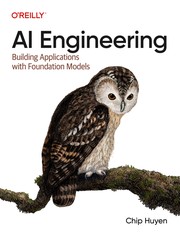 |
AI Engineering | the application-layer anchor, with the strongest evaluation coverage on the shelf. | View on Amazon |
 |
Hands-On Large Language Models | visual intuition for how models work, with runnable code. | View on Amazon |
 |
Build a Large Language Model (From Scratch) | code a GPT-style model yourself and never wonder what's inside again. | View on Amazon |
 |
Designing Machine Learning Systems | the MLOps foundation that still underpins LLM production systems. | View on Amazon |
Partner offer
Educative Unlimited: every AI course, one subscription
Interactive, browser-based courses with no local setup — a natural fit for the reading paths above. One subscription unlocks the full generative AI, ML, and data catalog, so you can work through it at your own pace.
As an Amazon Associate I earn from qualifying purchases. Links on this page are affiliate links, and I may earn a commission at no extra cost to you.
Unlock AI That Actually Works
Get lifetime access to GPT-6 Astra, Claude Fable 5.1, Gemini 3.5, Grok 4.5, and more — all in one platform. Build websites, apps, videos, content, and digital products from a single command. No monthly fees. No tool-hopping.
Click here to get GPTAstra Max now — one-time payment, lifetime access.
Frequently Asked Questions
Which book should you start with?
Start with AI Engineering: Building Applications with Foundation Models by Chip Huyen if you build LLM applications — it shows up first on almost every 2026 list, applies systems thinking to foundation models you didn't train yourself, covers prompting, retrieval, fine-tuning, inference optimization, architecture, and user feedback, and gives evaluation serious space with chapters on evaluation methodology and evaluating AI systems; one reviewer notes the companion repository holds summaries and resources rather than runnable code, so don't expect a code-along book. Choose Hands-On Large Language Models by Alammar and Grootendorst if you want intuition first: O'Reilly 2024, abundant visuals in the style that made Jay Alammar's illustrated transformer explanations famous, runnable code in the repository, aimed at beginner through intermediate readers. Pick Build a Large Language Model (From Scratch) by Sebastian Raschka (Manning, 2024) if you learn by writing code — reviewers praise it as one of the best technical books they've read, the companion repository holds the code you'll run, but it demands patience and some PyTorch comfort. The right order is usually: understand the model, build an application, then learn to evaluate and operate it — many people read in reverse and wonder why evaluation chapters feel abstract.
What books teach how LLMs work under the hood?
Four books cover model internals at different depths. Hands-On Large Language Models (Alammar and Grootendorst, O'Reilly 2024) explains language models with abundant visuals and practical examples, carrying Jay Alammar's illustrated-explanation style forward, best for visual learners who want to understand what the model does before using it. Build a Large Language Model (From Scratch) (Raschka, Manning 2024) walks you through coding a GPT-style model yourself; a newer Raschka title on building a reasoning model from scratch appears in 2026 catalogs, but its release status is unconfirmed, so check the publisher. The Hundred-Page Language Models Book (Burkov) traces the evolution of language models in a short, structured read placed at beginner level — a fast conceptual foundation before longer books. Foundations of Large Language Models (Xiao and Zhu) leans theoretical with mathematical depth and research context for advanced readers; sample a chapter first. For systems thinking, Designing Machine Learning Systems (Huyen) predates the LLM boom and still anchors MLOps reading lists with data pipelines, deployment, monitoring, and iteration — pair it with AI Engineering if you're new to production ML.
Where are the dedicated books on LLM evaluation?
They barely exist. Dedicated books on LLM evaluation remain rare, and most evaluation content lives in chapters of broader books, with AI Engineering offering the strongest coverage found — evaluation methodology plus a chapter on evaluating AI systems. To go deeper, combine books with other sources: the free online textbook Speech and Language Processing by Jurafsky and Martin, which covers evaluation fundamentals and benchmarks in NLP (browse the current draft's chapter list before relying on it); Hugging Face's evaluation guidebook, covering evaluation methodology for language models; practitioner essays and course materials from people who run evals in production, including the instructors behind the popular cohort courses; and primary papers on LLM-as-a-judge, benchmarks, and bias. Watch for new titles, since the gap invites publishers, and check release dates and author experience before buying. Agent books deserve similar caution: one catalog review found most 2026 language-model titles remain in early access with only a handful finished, and early-access books change as authors revise chapters — check publication status, read the table of contents, look at reader feedback, and pair any agent book with vendor and open-source framework documentation since that area moves fastest.
How do you choose a book and get value from it?
Ask three questions before buying: what do you want to do (understand model internals, build applications, or run systems in production), how do you learn best (visual explanations, code you type yourself, or system-level design thinking), and how current must it be — application-layer books age faster than books about transformers. Three reading paths cover most goals: Application Developer (6-8 weeks): Hands-On Large Language Models, then AI Engineering, then Prompt Engineering for LLMs, with a hands-on project applying each step. Deep Understanding (10-12 weeks): The Hundred-Page Language Models Book, Build a Large Language Model (From Scratch), Foundations of Large Language Models if you want theory, then AI Engineering to connect internals to applications. Production Engineer (6-8 weeks): Designing Machine Learning Systems, AI Engineering, LLM Engineer's Handbook for an end-to-end build, plus evaluation resources beyond books. To get value: read with a project open, type the code yourself instead of pasting it, check errata and repository issues, read the table of contents first and skip unneeded chapters, take notes on decisions and trade-offs rather than facts, and test claims against current vendor documentation. Before buying, check publication date, read the sample chapter, weigh the author's practitioner experience, review the companion repository's recent commits and open issues, and distrust affiliate rankings — many reading lists earn commissions on clicks.
Wrapping This Up
Start with AI Engineering if you build applications, Hands-On Large Language Models if you want intuition, and Build a Large Language Model (From Scratch) if you want to code the engine yourself. Add Designing Machine Learning Systems for the operations foundation, and fill the evaluation gap with free resources and practitioner writing.
Pick one book, open a project beside it, and read a chapter this week. A book you apply beats a library you admire.



 Join on Telegram