 Buy me a coffee

Contents
Figure 1: Best Books on Large Language Models and Deep RL — seven books worth the shelf space, and the reading order that makes them stick
You do not need forty tabs and a dozen half-watched lectures. You need two or three good books and a plan for reading them. Here are seven worth your shelf space, which ones to read first, and which ones to skip until you need them.
How I Picked
I checked every title below against its publisher or author page, so the editions and dates are current as of this week. The rankings are my judgment. I did not read these books cover to cover for this article, and I only describe what each page says is inside.
Here is my filter:
- Does it match a goal? Building a model, using one, shipping one and aligning one are four different jobs.
- Is it current? LLM books age fast. Dates matter more here than in most fields.
- Does it respect your time? Short and focused beats encyclopedic.
Every title below links to a search page, so you can check the current edition, price and sample chapters before you buy.
If You Want to Build an LLM
Build a Large Language Model (From Scratch) by Sebastian Raschka
Manning, September 2024, 368 pages. Manning describes it as covering a GPT-style LLM from design through pretraining to fine-tuning. Its listed skills include preparing a training dataset, loading pretrained weights, fine-tuning for text classification, and using human feedback so a model follows instructions.
- Who it suits: readers with intermediate Python skills and some knowledge of machine learning, per the page.
- Why I would start here: you write the parts yourself, so nothing stays a black box.
- Catch: the page gives no chapter-by-chapter breakdown, so skim the sample chapters before you buy.
Speech and Language Processing, 3rd ed. draft by Dan Jurafsky and James H. Martin
It is an online textbook, and the page hosts chapters, slides and a full-book PDF. The draft's Volume I covers words and tokens, embeddings, neural networks, transformers and pretraining, and post-training. Think of it as the reference you keep open while reading everything else.
- Catch: it is unfinished. The Agents chapter is marked as not written yet, and the Interpretability chapter is a large stub, about half done. Asked when it will be done, the authors answer: do not ask.
If You Want to Use an LLM Well
Hands-On Large Language Models by Jay Alammar and Maarten Grootendorst
O'Reilly, September 2024, 428 pages. O'Reilly lists it as beginner to intermediate. It has three parts:
- Understanding language models: an introduction, tokens and embeddings, and a look inside the transformer.
- Using pretrained models: classification, clustering and topic modeling, prompt engineering, advanced generation, semantic search and RAG, and multimodal models.
- Training and fine-tuning: creating embedding models and fine-tuning representation and generation models.
This is the friendliest on-ramp in the list. If tokens and embeddings are still fuzzy, begin here.
AI Engineering by Chip Huyen
O'Reilly, December 2024, 534 pages. The page lists AI application developers as the audience and intermediate to advanced as the level. It covers adaptation methods (prompt engineering, RAG, agents, finetuning and dataset engineering), evaluation including AI-as-a-judge, efficient deployment with attention to latency and cost, and a closing run through architecture, guardrails, monitoring and user feedback.
- Why it earns a spot: it covers the unglamorous parts, meaning evaluation, cost and monitoring, which decide whether an LLM app survives contact with users.
- Catch: it is about applications, not model internals. Do not expect to learn how attention works here.
If You Want to Learn Deep RL
Reinforcement Learning: An Introduction by Richard Sutton and Andrew Barto
2nd edition, MIT Press, 2018. The page I fetched is a mirror of the book's site. It lists the authors and edition, links a full PDF without margins, and offers a buy-from-Amazon option. It does not describe the contents. I am recommending it from its reputation as the standard foundations text, which is my judgment, not something I verified. Check the authors' own site for current access terms before you assume it is free.
- Why it comes first: deep RL builds on the vocabulary of states, rewards and policies, and this is where most courses borrow it from.
- Catch: it is a textbook, and a mathematical one.
Deep Reinforcement Learning Hands-On, 3rd ed. by Maxim Lapan
Packt, November 2024, 716 pages. The page lists these topics:
- Value-based methods: the Bellman equation, deep Q-networks and their extensions.
- Policy-based methods: policy gradients and actor-critic (A2C and A3C).
- Advanced RL: continuous control, trust region methods (TRPO and PPO) and black-box optimization.
- Newer material: RLHF, AlphaGo Zero and MuZero, and LLMs.
- Tools and applications: OpenAI Gym and PyTorch, plus stock trading, web navigation and multi-agent RL.
The page says it assumes familiarity with Python, calculus, and machine learning concepts. This is the book I would pair with Sutton and Barto: one gives you the theory, the other gives you code to run.
- Catch: at 716 pages, it is a commitment. Pick two or three algorithms and skip the rest on the first pass.
If You Want to Align an LLM
Reinforcement Learning from Human Feedback by Nathan Lambert
It is a free online book and course on RLHF, preference tuning, reward models, RLVR and post-training. The page says Manning published the print, ePub and liveBook editions in July 2026. It also says the web version differs from the physical book and tracks errata, and that the first reprint was in October 2026.
Its topics, per the page:
- What RLHF does, why it was created and its history.
- A primer on the RL context the book needs.
- The canonical recipe: instruction tuning, reward models, rejection sampling, reinforcement learning, on-policy distillation and direct alignment algorithms.
- Advanced topics: synthetic data, tool use, character training and evaluation.
In my opinion it is the best single bridge between the two halves of this article's title, because RLHF is where LLMs and deep RL actually meet.
If you want structure alongside the reading, the courses guide sorts the main post-training programs, and the reward models explainer covers the scoring side in more depth. For tooling, the RLHF tools comparison covers the stack, and the GRPO explainer covers the algorithm.
A Reading Order That Works
Here is a path for each goal. Pick the one that fits.
Use LLMs at work:      Hands-On Large Language Models -> AI Engineering
Understand how:        Build a Large Language Model (From Scratch), with Jurafsky and Martin beside it
Learn RL:              Reinforcement Learning: An Introduction -> Deep RL Hands-On
Understand alignment:  Sutton and Barto (early chapters) -> Lapan (policy gradients, PPO) -> Lambert
- I want to use LLMs at work: Hands-On Large Language Models, then AI Engineering.
- I want to understand how they work: Build a Large Language Model (From Scratch), with Jurafsky and Martin open beside it.
- I want to learn RL: Sutton and Barto for concepts, then Lapan for code.
- I want to understand alignment: Sutton and Barto's first chapters, a Lapan chapter or two on policy gradients and PPO, then Lambert.
- I want it all: do not. Pick one path, finish it, then pick another.
A few habits help whichever path you take:
- Run the code. Reading about training is not training.
- Check the date. If a book predates the techniques you care about, cross-check with newer sources.
- Skim before you commit. Most publishers offer sample chapters.
# The habit that matters: clone the code, run one example per sitting
git clone https://github.com/rasbt/LLMs-from-scratch
cd LLMs-from-scratch
pip install -r requirements.txt
Common Pitfalls
- Buying the whole shelf at once. Three unfinished books teach you less than one finished book.
- Reading without running code. Chapters on training only click after you have watched a loss curve.
- Starting alignment before RL basics. RLHF assumes the vocabulary of policies, rewards and KL control.
- Chasing encyclopedias. A 900-page survey is a reference, not a first book.
- Ignoring dates. A book from 2022 may predate the methods you are trying to learn.
- Trusting a list without skimming. Publisher sample chapters exist for exactly this reason.
Best Book to Read
If you only read four, read these:
| Cover | Book | Description | Get it |
|---|---|---|---|
 |
Build a Large Language Model (From Scratch) | the build path, from someone who teaches it. | View on Amazon |
 |
Hands-On Large Language Models | the friendliest way to get fluent with tokens, embeddings and RAG. | View on Amazon |
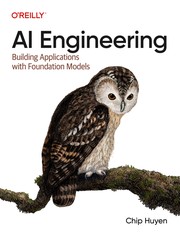 |
AI Engineering | evaluation, cost and monitoring, the parts that decide whether an app survives. | View on Amazon |
 |
Reinforcement Learning from Human Feedback | the bridge between LLMs and deep RL, free to read online. | View on Amazon |
As an Amazon Associate I earn from qualifying purchases. Links on this page are affiliate links, and I may earn a commission at no extra cost to you.
Unlock AI That Actually Works
Get lifetime access to GPT-6 Astra, Claude Fable 5.1, Gemini 3.5, Grok 4.5, and more — all in one platform. Build websites, apps, videos, content, and digital products from a single command. No monthly fees. No tool-hopping.
Click here to get GPTAstra Max now — one-time payment, lifetime access.
Frequently Asked Questions
Which LLM book should I read first?
Start with Build a Large Language Model (From Scratch) if your goal is to understand how these systems work, because you write the components yourself. If your goal is using models at work, start with Hands-On Large Language Models instead, which is the friendliest on-ramp in this list and assumes very little. If you want to ship applications, AI Engineering is the better first book. Pick by the job you want to do next, not by page count.
Do I need deep RL knowledge to learn LLM alignment?
You need the vocabulary more than the mathematics. RLHF, DPO and GRPO are described in terms of policies, rewards, value estimates and KL divergence, so a first pass through Sutton and Barto plus a chapter or two of Lapan makes the alignment literature much easier to read. In practice, many engineers learn DPO without formal RL training because direct alignment methods avoid an explicit policy gradient loop. For PPO and GRPO, the RL background earns its keep quickly.
Are these LLM books still current in 2026?
The core titles still hold up because they teach architecture and process rather than a specific library version. Raschka, Alammar and Grootendorst, and Huyen all published in late 2024, which is current enough for transformers, tokens, fine-tuning and evaluation. Lambert's RLHF book is the freshest, with a July 2026 print edition and an online version that tracks errata. Check the edition date on any book you buy, and cross-check fast-moving details such as model names and tooling against current documentation.
Is Sutton and Barto's RL book free?
The authors have long made a PDF of Reinforcement Learning: An Introduction available from the book's own site, and the page lists a full PDF without margins. Access terms can change, so check the authors' site rather than assuming a copy you find elsewhere is legitimate. The second edition is the one to read. If you prefer paper, it is also sold in print, and the textbook remains the standard reference that most RL courses draw their vocabulary from.
Can I learn LLMs from books alone?
You can learn the concepts from books, but not the practice. Training runs fail in ways that chapters do not prepare you for: a loss that will not move, a tokenizer mismatch, a dataset with duplicated examples, or a fine-tune that improves the benchmark and ruins the tone. Reading one good book and then running its examples beats reading four books without running anything. Treat books as the map, and a small project as the territory.
Wrapping Up
The best book depends on the job. Raschka teaches you to build, Alammar and Grootendorst teach you to use, Huyen teaches you to ship, Sutton and Barto and Lapan teach you RL, and Lambert ties RL back to language models. Jurafsky and Martin sit beside all of them as a free reference that is still being written.
Choose one path, order or open the first book today, and read a chapter this week. Which job is yours?
Related Articles
- Best Courses on LLM Alignment and Post-Training
- Reward Models Explained: How LLMs Learn Human Preferences
- Best RLHF and LLM Post-Training Tools Compared
- GRPO Explained: Group Relative Policy Optimization
- KL Divergence in RLHF: Why Models Are Kept Close to the Base
- Preference Datasets Explained: Pairwise Human Feedback



 Join on Telegram