Contents
Figure 1: Match each book to the job it does for you
Most reading lists on AI ethics make one of two mistakes: they pile up bestsellers without saying who each book is for, or they list only the technical texts and skip the harms those techniques are meant to address. A useful reading plan needs both, and it needs to match your role. This guide sorts the books on AI ethics and algorithmic fairness by what they do for you — foundations for builders, accounts of harm, analyses of power, philosophy and safety, and a reality check on hype — with honest notes on who will get the most from each, reading paths by role, and the pitfalls that make lists like this useless in practice.
A note on verification: several of these titles were checked against current reading lists and publisher pages, including the Barocas, Hardt, and Narayanan textbook, but publication details for others come from compiling notes rather than fresh lookups on every entry. Confirm editions, availability, and any free versions before you buy.
Books for People Who Build or Evaluate Models
If you write training loops, review model cards, or sign off on deployment, start here — these three books give you the vocabulary and the tradeoffs you'll actually defend in design reviews.
Fairness and Machine Learning: Limitations and Opportunities by Solon Barocas, Moritz Hardt, and Arvind Narayanan (MIT Press, 2023) is the standard textbook. MIT Press describes it as an introduction for advanced undergraduate and graduate students to the intellectual foundations of the field, drawing on disciplinary perspectives to identify the opportunities and hazards of automated decision-making, and reviews consistently praise its comprehensive, interdisciplinary treatment of fairness in algorithmic decision-making across ethics, law, and the social sciences. The most valuable lesson for practitioners is that common fairness definitions can't all be satisfied at once, so you have to choose and justify tradeoffs instead of hunting for a single "unbiased" metric — the same impossibility logic you'll meet in the fairness metrics comparison from this series. It's been free online at fairmlbook.org since earlier drafts and appears in the Fairlearn project's further reading. Expect real math.
The Ethical Algorithm by Michael Kearns and Aaron Roth (Oxford University Press, 2019) is written by two computer scientists for a general audience. It explains how fairness, privacy, and related goals can be built into algorithms, and where the limits are. It's a good bridge for engineers who want the ideas without a graduate course.
Practical Fairness by Aileen Nielsen (O'Reilly, 2020) is aimed at practitioners, with a focus on applying fairness thinking, law, and tooling inside real projects. Check how current its tooling references are, since libraries change quickly — pair it with hands-on walkthroughs like the bias detection guide and the Fairlearn tutorial to see what the current stack looks like.
Books That Show What Goes Wrong
These books ground the field in real people and real systems, and they're the right entry point if you need to convince a team or a stakeholder that the problem is concrete.
Weapons of Math Destruction by Cathy O'Neil (2016) is a data scientist's account of how opaque, scaled-up models in hiring, credit, education, and policing entrench inequality. It's a fast read, a common starting point for product teams and policymakers, and it introduces a useful test: is the model opaque, does it scale, and does it do damage?
Automating Inequality by Virginia Eubanks (2018) reports on how automated systems in welfare, housing, and child services affect poor and working-class people. It's less about model internals and more about institutions, which makes it valuable for anyone building in the public sector.
Algorithms of Oppression by Safiya Umoja Noble (2018) examines how search engines reproduce racial and gender stereotypes, grounded in information science. It shows that "neutral" ranking systems encode commercial and social assumptions — a claim that has only aged better as search has absorbed generative features.
Race After Technology by Ruha Benjamin (2019) argues that technical systems can reproduce racial hierarchy under a veneer of objectivity, introducing the idea of the "New Jim Code." It pushes readers to ask who a system serves, not just whether it's accurate.
Unmasking AI by Joy Buolamwini (2023) is a first-person account from the researcher whose work exposed accuracy gaps in commercial facial analysis systems across skin tone and gender. It's one of the most readable accounts of how a bias finding turns into change, and 2026 reading lists still rank it among the best books on algorithmic bias and accountability.
Artificial Unintelligence (2018) and More Than a Glitch (2023) by Meredith Broussard challenge "technochauvinism," the belief that a technical solution is always the better one. Her newer book focuses on bias as a structural feature, not a bug to be patched — a framing worth holding while you work through the metric-driven texts above.
Books on Power and the Bigger Picture
If the harm accounts tell you what goes wrong, these tell you why the systems keep getting built the same way.
Atlas of AI by Kate Crawford (2021) follows the material and human costs of AI, from mining and energy to data labeling and surveillance, reframing AI as an industrial system rather than just software.
Empire of AI by Karen Hao (2025) is a journalist's account of the industry's leading labs and the power struggles around them. It's recent enough to speak to the current landscape, though as a single reporter's account it's one perspective — read it alongside others.
Power and Progress by Daron Acemoglu and Simon Johnson (2023) is an economic history asking who benefits from technological change and how that's been shaped by choices. It's a useful lens for labor and inequality questions that pure fairness math doesn't reach.
Data Feminism by Catherine D'Ignazio and Lauren Klein (2020) and Design Justice by Sasha Costanza-Chock (2020) examine how data and design practices reflect power, and propose more participatory approaches. Both were published by MIT Press with open-access options — verify current availability. They're particularly useful as counterweights to the formal fairness literature, since they argue that metric-based fairness alone can miss questions of who gets a say.
Philosophy and Safety
For readers who want the conceptual frame behind the technical and journalistic work — or who work on alignment rather than fairness directly.
The Alignment Problem by Brian Christian (2020) is a thoroughly reported history of how researchers have tried to get machine learning systems to do what people intend, spanning fairness, interpretability, and reinforcement learning. It's one of the best books for technical readers who want the human stories behind the field.
Human Compatible by Stuart Russell (2019) argues that systems should be designed to be uncertain about human preferences, as a path to safer AI. It's more about long-term control than fairness, but it frames the stakes clearly.
AI Ethics by Mark Coeckelbergh (MIT Press, 2020) is a compact philosophical overview of the major issues, from responsibility and bias to autonomy and policy — a good short book for people who want concepts and vocabulary before the deep dives. If a course suits you better as a first step, the AI ethics courses list from this series covers structured alternatives.
The AI Mirror by Shannon Vallor (2024) is a philosopher's argument that AI reflects and flattens human values rather than replacing human judgment. It's reflective and less technical than the rest of this section.
A Reality Check on Hype
AI Snake Oil by Arvind Narayanan and Sayash Kapoor (Princeton University Press, 2024) separates AI that works from AI that doesn't, with particular skepticism toward predictive systems for hiring, risk scoring, and similar judgments. It's a useful antidote to vendor claims, and a good complement to the fairness textbook by one of that book's co-authors. If you only have budget for one new purchase after the classics, this is the one that keeps paying off during procurement conversations.
Reading Paths by Role
Pick the path that matches your job, start with two or three books, and don't try to read the whole list in order.
- ML engineer or data scientist: start with Weapons of Math Destruction for motivation, read Fairness and Machine Learning for the technical foundations, then The Alignment Problem and Design Justice to widen your view of what "good" means.
- Product manager or business leader: Weapons of Math Destruction, Unmasking AI, and AI Snake Oil, followed by Power and Progress if you want the economics.
- Policy, legal, and compliance readers: Automating Inequality, Race After Technology, Atlas of AI, and AI Ethics, then the fairness textbook's chapters on law and discrimination.
- Three books total: Weapons of Math Destruction, Fairness and Machine Learning, and The Alignment Problem cover cases, mechanics, and the research landscape between them.
How to Read in This Space
Books on this topic age unevenly, so read them as arguments with expiration dates on parts, not as permanent manuals. The case studies and arguments in the classics hold up, but tool recommendations, regulation, and the state of the art shift quickly. Pair older books with current sources on the EU AI Act, US guidance, and active research, and treat any list of "best practices" as provisional.
Authors also disagree, and that's productive. The fairness textbook shows that formal criteria conflict, while Design Justice and Data Feminism argue that the deeper issue is power and participation, which no metric resolves. Reading both camps prevents a common failure: believing you've solved fairness because a number moved.
Finally, notice who's missing. Most of these books originate in US and UK contexts, so supplement them with work from other regions, since harms and legal frameworks vary.
Common Pitfalls
- Reading only technical texts and treating fairness as a metric-tuning exercise.
- Reading only critiques and finishing without any concrete practice to apply.
- Treating any one author's framing as the settled view.
- Relying on a five-year-old tool recommendation without checking whether the library or law has changed.
- Skipping affected communities' own accounts in favor of expert commentary alone.
- Reading without applying, when the point of these books is to change how you build, review, or buy systems.
Recommended Books
| Cover | Book | Description | Get it |
|---|---|---|---|
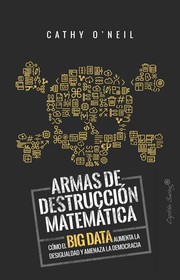 |
Weapons of Math Destruction | the fastest entry point and the book most often responsible for a team's first real fairness conversation. | View on Amazon |
 |
Fairness and Machine Learning | the technical foundation, also free at fairmlbook.org if you want to read before buying. | View on Amazon |
 |
The Alignment Problem | the research landscape and the human stories that connect fairness, interpretability, and safety. | View on Amazon |
Unlock AI That Actually Works
Get lifetime access to GPT-6 Astra, Claude Fable 5.1, Gemini 3.5, Grok 4.5, and more — all in one platform. Build websites, apps, videos, content, and digital products from a single command. No monthly fees. No tool-hopping.
Click here to get GPTAstra Max now — one-time payment, lifetime access.
Frequently Asked Questions
What is the best book on AI ethics and algorithmic fairness?
There isn't one book that does every job, which is why this list is sorted by function. If you read only one, make it Weapons of Math Destruction by Cathy O'Neil — it's the fastest way to understand the failure modes the rest of the field responds to. If you build or evaluate models, follow it with Fairness and Machine Learning by Barocas, Hardt, and Narayanan, which is the standard technical treatment and is free to read online at fairmlbook.org. For the research landscape and human stories behind alignment and fairness work, The Alignment Problem by Brian Christian is the best-reported account.
Do I need a math or machine learning background to read these books?
Only for one of them. Fairness and Machine Learning expects comfort with linear algebra, probability, and gradient-based optimization — it's written for advanced undergraduates and graduate students, and it earns its math because the impossibility results are the point. Everything else on this list is written for general or professional readers: O'Neil, Eubanks, Noble, Benjamin, and Buolamwini are reporting and analysis, Kearns and Roth explain ideas with minimal formalism, and Christian, Crawford, and Vallor are narrative or philosophical works with no prerequisites beyond attention.
Are any of these books free to read?
Fairness and Machine Learning has been available free online at fairmlbook.org since earlier drafts, and it appears in the Fairlearn project's further reading, so you can read it before deciding whether to buy a copy. Data Feminism by Catherine D'Ignazio and Lauren Klein and Design Justice by Sasha Costanza-Chock were published by MIT Press with open-access options. Confirm current availability on the publishers' and authors' pages before you rely on free access, since editions and hosting change.
How do I keep an AI ethics reading list from going stale?
Books on this topic age unevenly. The case studies and arguments in the classics hold up, but tool recommendations, regulation, and the state of the art shift quickly — Practical Fairness's library references, for example, should be checked against current tooling. Pair older books with current sources on the EU AI Act, US guidance, and active research, treat any list of best practices as provisional, and supplement the predominantly US and UK perspectives with work from other regions, since harms and legal frameworks vary.
Wrapping This Up
The strongest reading plan combines a technical foundation like Fairness and Machine Learning, vivid accounts of harm from O'Neil, Eubanks, Noble, Benjamin, and Buolamwini, big-picture analyses from Crawford, Hao, and Acemoglu and Johnson, alignment and philosophy from Christian, Russell, and Coeckelbergh, with AI Snake Oil to keep you skeptical. Pick by your role, start with two or three, and read them alongside current regulation and research.
Will reading these books make your systems fair? No — books build judgment, not guarantees. But engineers and managers who've read them tend to ask better questions early: who is affected, what the data leaves out, and who gets to object. Those questions are where most real-world fairness work begins, and they're a better outcome than any shelf of unread spines.